Benjamin Franklin and Gossip

Ben Franklin thumb picture
As you know Benjamin Franklin was a great diplomat. He proved that over and over again. In the Continental Congress with the Declaration of Independence with Thomas Jefferson and John Adams, and others. In his victories with France in obtaining the funds and cooperation of the French in the Revolutionary War. In the Constitutional Convention when the arguments were starting to take over the discussions. And just generally in his life time habits and discourses.

Here’s an example of how he achieved so much: read more

Jefferson’s War and the Barbary Pirates

ThomasJeffersonIn the early days of our Nation, John Adams at first didn’t want to build up our Navy after the Revolutionary War. When Thomas Jefferson was elected to replace Adams, the nations of Europe and the United States were becoming more and more subject to the pirates of the Barbary coast.

When merchants wanted to sail through the Mediterranean Sea they were charged a bounty by the Barbary Pirates in order to pass Tripoli and other ports without being attacked. The Barbary Pirates were actually Muslims trying to extort benefits for not destroying the ships together with their cargoes. Most nations went along with this blackmail. It was just easier than fighting. read more

George Washing Looking Back

GeorgeWashingtonGeorge was an indispensable man in history. He had something to say about looking back:

“We ought not to look back unless it is to derive useful lessons from past errors, and for the purpose of profiting by dear-bought experience.”

John Adams added:

“Facts are stubborn things; and whatever may be our wishes, our inclinations, or the dictates of our passion, they cannot alter the state of facts and evidence.”

As you know, John Adams was the attorney who argued in defense of the British soldiers in the Boston Massacre trials. (If you didn’t know that then perhaps you would like to read the book “Founding Fathers—Uncommon Heroes.”) read more

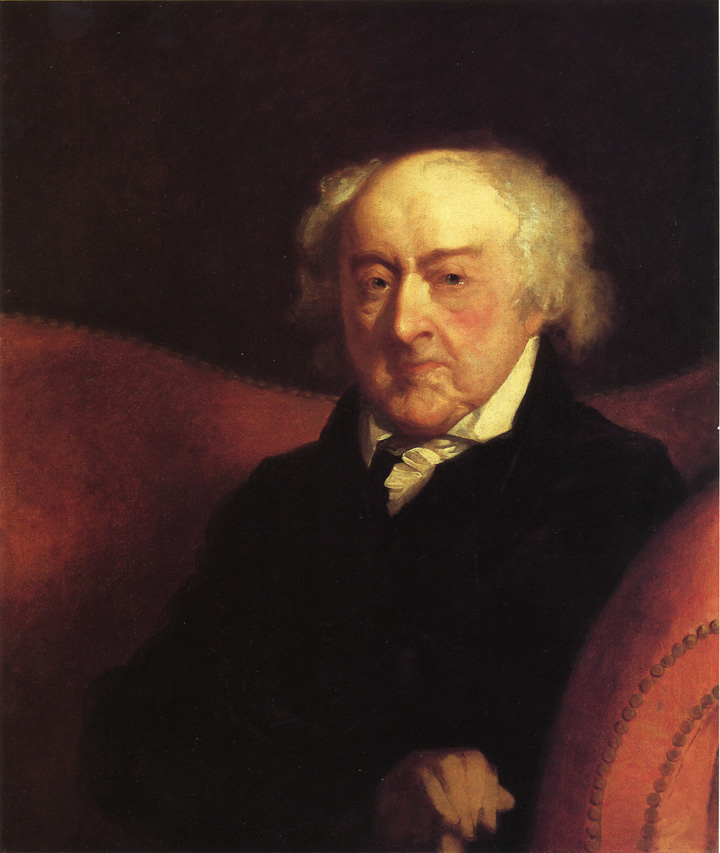
John Adams and Trust

JohnAdamsJohn Adams is possibly to most forgotten Founding Father and President we have had as a new nation. He did and said some amazing things. Here’s one of his thoughts:

“There is danger from all men. The only maxim of a free government ought to be to trust no man living with power to endanger the public liberty.”

I wonder what he would think of today’s situation in the world!”

John Adams and Government

JohnAdamsJohn Adams was an important member of the First Continental Congress. Then the next year John was elected to represent Massachusetts in the second Continental Congress in Philadelphia, which met in May, 1775. It was in that session that he nominated George Washington to become the First Commander of the United Colonial Armies, and he was soon elected and left to begin his service in that position.

By January, 1776, a new pamphlet had begun circulating in the Colonies. A month later, when John resumed his seat in the Continental Congress, this new pamphlet was already in its third printing. In a letter to Abigail, John commented that he expected “Common Sense” (the name of this pamphlet) to become the common faith in the colonies. read more

Governor Patrick Henry, Give Me Liberty . . .

PatrickHenryI can recall a time after High School, when I could sort of remember the name of Patrick Henry. I even knew that he gave a monumental talk at some point in his life where he said the words: “Give me liberty . . . or give me death!”

I didn’t know when he gave that speech, or where it occurred. But I seemed to think it was sometime around the Civil War period. As you can guess, history was not my favorite subject in High School.

Then in 1976, yes, 1976, as a young attorney, I was elected to represent a Phoenix Mayor’s committee at a National Convention of Citizens Crime Commissions, to be held in Philadelphia, Pennsylvania that year. For those of you who weren’t around then, that was our Nation’s Bi-centennial celebration of the adoption of our Declaration of Independence. read more

Benjamin Franklin’s Airbaths

Ben FranklinFranklin had a habit of engaging in a daily “Air Bath.” When Ben would arise every morning, he would open every window in his room, remove all of his clothes and sit around in the room for an hour or so in the “altogether”. Not even cold winter weather would discourage him in this practice.

He often recommended this practice to his friends or fellow traveling companions. He once told John Adams that this was the reason he rarely suffered from a cold. John Adams, however, couldn’t quite convert to it! read more

Thomas Jefferson, Books and Learning

ThomasJeffersonOne of Thomas Jefferson’s personal characteristics was that he was a sponge for learning. Even as a youth he was so inquisitive that he was such a good student, the classes didn’t go fast enough for him.

He graduated college at William and Mary in Williamsburg, Virginia, and then continued to study law with George Wythe, who became the first law professor at that college. Wythe later became one of the signers of Jeffferson’s Declaration of Independence.

In Jefferson’s Monticello, his mansion near Charlotte, Tom kept several different locations available for him to sit and read and study at the drop of a hat. He wrote to John Adams: “I cannot live without books.” His collection of books exceeded that of the Congressional Library, which was burned  in the War of 1812, and replaced by Jefferson in 1814. read more

The Founding Fathers and the World Series — NY Mets? KC Royals?

Polo Grounds during World Series Game, 1913 from the Bain Collection by David Shapinsky from Washington, D.C.

Polo Grounds during World Series Game, 1913 from the Bain Collection by David Shapinsky from Washington, D.C.

There’s still argument over the actual beginning of baseball in the United States, but the World series didn’t actually begin until the early 1900’s. So it’s clear that our Founding Fathers would not have been interested in the World Series, or even known of it.

But if we could consider it, who would the Founding Fathers root for in a game. In today’s world series, George Washington would, of course, root for the New York Mets, having served as President in New York — Washington, DC was still on the drawing board. Although he was a great horseman and didn’t have professional sports in those days, I think he would like the game of baseball. read more

Freedom, Founding Fathers, and The Trial of Christ

HeaderIt’s hard to explain, especially in just a few words, but I’ll try. People always ask me why I wrote my books in such seemingly different areas or topics.

My first book, “Founding Fathers—Uncommon Heroes” is a book with chapters about six of our Founding Fathers. Men who had the courage to establish the United States of America. The six men are Benjamin Franklin, George Washington, John Adams, Thomas Jefferson, Patrick Henry, and James Madison.

My second book, “The Illegal Trial of Christ,” came at the request of my publisher, who knew I gave popular presentations about this topic. This book includes biographical information about the many players involved in the four trials that took place at the end of Christ’s life. In this book I also explain some of the rules, procedures, and laws in effect at that time. Both Roman law and Hebrew law. By understanding these people and their circumstances, readers will come to recognize and grasp why some things are worded the way they are in the four Gospels. read more