
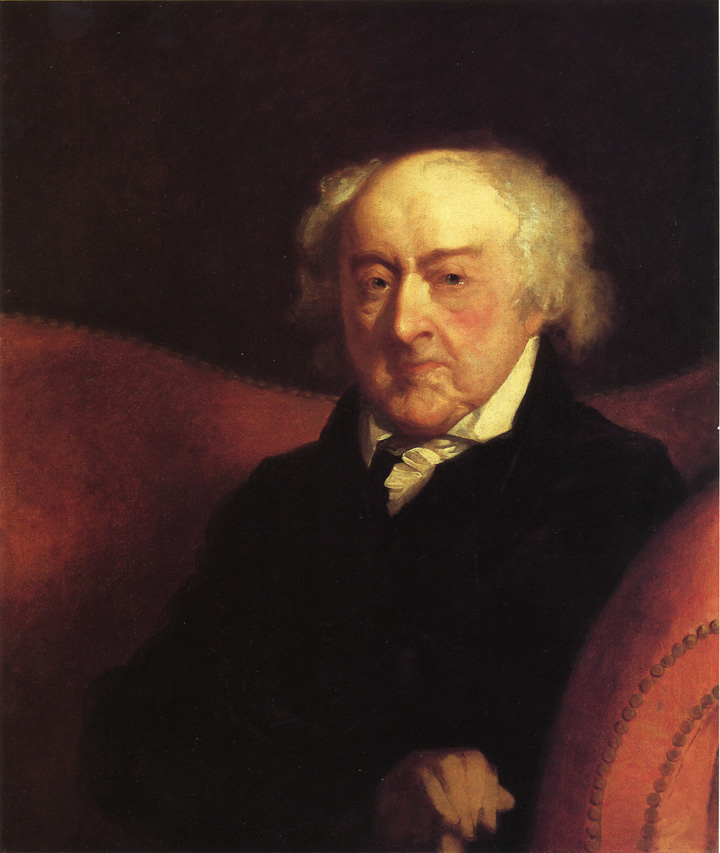
 John Adams was an important member of the First Continental Congress. Then the next year John was elected to represent Massachusetts in the second Continental Congress in Philadelphia, which met in May, 1775. It was in that session that he nominated George Washington to become the First Commander of the United Colonial Armies, and he was soon elected and left to begin his service in that position.
By January, 1776, a new pamphlet had begun circulating in the Colonies. A month later, when John resumed his seat in the Continental Congress, this new pamphlet was already in its third printing. In a letter to Abigail, John commented that he expected “Common Sense” (the name of this pamphlet) to become the common faith in the colonies.
Adams was flattered that many considered him to be the author of this new pamphlet. The author was later revealed to be Thomas Paine, an English immigrant. This immigrant had landed in Philadelphia a year earlier with not much more than a letter of introduction from Benjamin Franklin. Common Sense was written in simple language, written to be understood by anyone who read it. Paine attacked the idea of a monarchy as absurd and evil. It was a call to arms.
John Adams, however, was the author of another pamphlet at about the same time. This pamphlet was titled “Thoughts on Government.” These thoughts were first included in a letter to fellow Congressman, William Hooper. Hooper was returning to his home to write a new Constitution for his home state of North Carolina. (Incidentally, John Adams later wrote the Constitution for the State of Massachusetts.) In his letter, Hooper had asked Adams for a “sketch” of his views on government.
Some people who had seen what Adams had written in his response, wanted copies for themselves. After hand writing an additional three copies, Adams had the pamphlet printed by a Philadelphia printer. The essay began:
“It has been the will of Heaven, that we should be thrown into existence at a period when the greatest philosophers and lawgivers of antiquity would have wished to live . . . A period when a coincidence of circumstances without example had afforded to thirteen colonies at once an opportunity of beginning government anew from the foundation and building as they choose. How few of the human race have ever had an opportunity of choosing a system of government for themselves and their children? How few have ever had anything more of choice in government than in climate?” (as quoted in “Founding Fathers—Uncommon Heroes” by Steven W. Allen, page 94-95).
It seems that we now have the chance to confirm the foundation provided by these men to a new government, and to also review the problems of ‘climate change’!
-

By: Steven W. Allen, J.D.
Steven W. Allen, J.D. is an author, speaker, and retired attorney. His book “Founding Fathers – Uncommon Heroes” is popular with all ages and is used in many schools. See his other books at www.StevenAllenBooks.com
-


-
The Federalist Papers
Constitutional Amendments
Founding Fathers and American Heroes
Founding Fathers and War
What About Benedict Arnold?
Books and Founding Fathers