John Adams and the Declaration of Independence

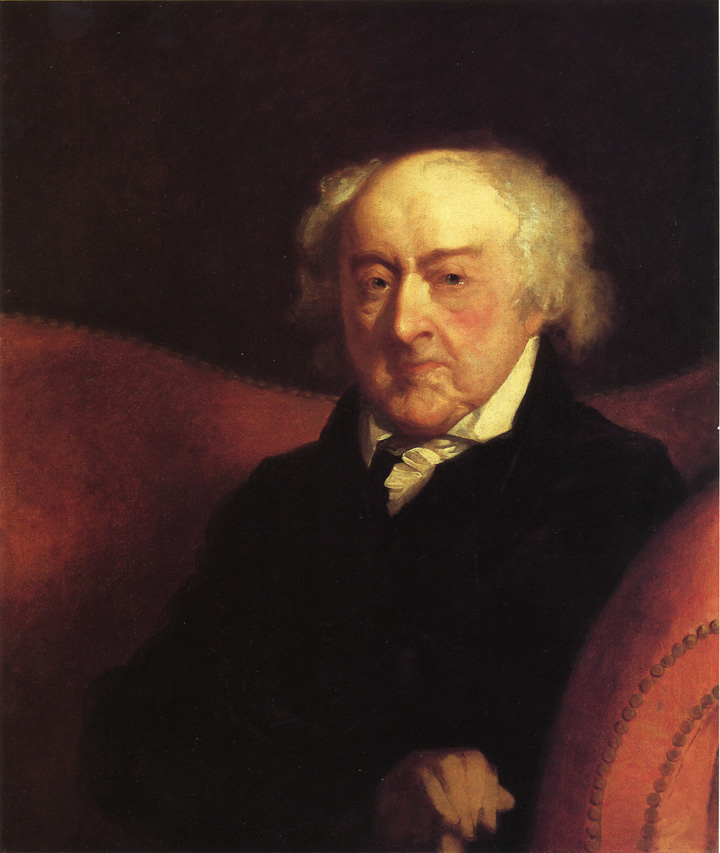
JohnAdamsJohn Adams, a lawyer, was truly at the front of the happenings of the Revolution with England. He wrote the pamphlet that had wide circulation and among others, caught the eye of Patrick Henry prior to his own Give Me Liberty speech.

John was a minister to France capturing a loan from Amsterdam which pretty much saved the Colonies in the war. He became the second President of the United States of America, upon the retirement of General George Washington.

What we sometimes forget about John is that he was the one who defended Thomas Jefferson’s draft of the Declaration of Independence at Philadelphia in 1776. Tom called him the “Colossus” for his vigorous defense. He carried the day and the Declaration was adopted. read more

Favorite Founding Father

Ben FranklinI have given many presentations about the Founding Fathers. I am the author of “Founding Fathers –Uncommon Heroes.” As I have spoken, many have asked “Who is your favorite Founding Father?”

That’s such a difficult question, I answer: “When I am speaking about George Washington, he’s my favorite. When I am talking about Thomas Jefferson, he’s my favorite. When I speak about Patrick Henry, he’s my favorite. When I am discussing John Adams, he’s my favorite. And when I speak about James Madison and Dolley Madison, they are my favorites.” read more

Thomas Jefferson has Succeeded

ThomasJefferson“To laugh often and love much, to appreciate beauty, to find the best in others, to give one’s self, this it to have succeeded.” –Ralph Waldo Emerson.

I believe that this is an accurate description of Thomas Jefferson. He did laugh at funny occurrences. I’ll give you an example:

One day while President Jefferson was out riding his horse as he did quite often. He came upon a man and stopped to talk with him. The man reviled the current President, not knowing he was current talking with the man himself. read more

John Adams defeats Thomas Jefferson, Then Visa Versa!

JohnAdamsThomasJeffersonJohn Adams was a firm supporter of Thomas Jefferson’s draft of the Declaration of Independence in the Continental Congress of 1776. Tom then referred to Adams as the Colossus of the debates.

When George Washington declined to run for a third term as President of the United States, John Adams was elected as his replacement. Thomas Jefferson received the next highest number of electoral votes, and so became his Vice President.

John Adams revealed a bit of humorous jealousy when he wrote of what future historians would record about his time: read more

Thomas Jefferson and Books

Library of Congress Reading Room

Thomas Jefferson loved books. To his friend, John Adams, he declared “I cannot live without books!” He was a voracious reader. When you visit his home at Monticello, you will not only see his library but you will also notice that he had several places set aside in multiple rooms in his home, where he could sit and read when time permitted.

The British burned down the Library of Congress in the War of 1812, along with several other buildings, like the President’s Mansion. Jefferson offered to sell his library to Congress to replace what they had lost. In 1815 Congress approved the purchase, and it took ten wagonloads to bring the books to Washington, DC! read more

John Adams and Thomas Jefferson Teach Each Other

History is full of fascinating facts! Here’s just one example:

Thomas Jefferson, from Virginia, and John Adams from Massachusetts, became fast friends during the Continental Congress in Philadelphia. It was here that Tom wrote the Declaration of Independence in only 17 days without book or pamphlet, while residing at the Graff House.

When Tom’s draft was presented to the Congress, Tom did not speak on its behalf, on behalf of his immortal document. Tom was not a very good public speaker. His voice was high and shrill and barely audible to a group. read more

Hebrew Law and U. S. Law

Illgegal Trial of Christ coverI’ve been re-reading a 2 volume work by Walter Chandler entitled “The Trial of Christ.” This book explains the Hebrew rules of court in great detail. It likewise explains the Roman laws, which were necessary because Judea was a nation conquered by Rome prior to the trial of Christ.

The amazing thing is it’s a wonder that anyone was ever found guilty of a crime punishable by death because the rules were so stringent about witnesses and judges (members of the Sanhedrin). But then as you read the accounts in the four Gospels of what transpired to bring Christ to the cross, you see vividly how many of the laws and rules of procedure were intentionally violated. read more

President John Adams and Shameless Self-promotion

JohnAdamsI’m reading a book by Debbie Allen called “Confessions of Shameless Self-Promoters.” Debbie is no relation of mine, but she is a good friend of mine and a professional speaker. One quote in her book really stood out to me. Here it is:

“You are one of a kind, therefore, no one can really predict to what heights you might soar. Even you will not know until you spread your wings.” (Gil Atkinson, page 111.)

That immediately reminded me of John Adams, who was sent by Congress to assist Benjamin Franklin in obtaining the support of France. They were making such slow progress, that Adams became very frustrated. So he decided to go to Amsterdam and see if he could do any better. read more

And To Think It All Started With 10 Commandments

On the wall in my law office, next to my grand bookcase full of law books, I had a framed cartoon.  It wasn’t a very large cartoon, but it made a point. The cartoon drawing showed a man, presumably a lawyer, standing in front of an enormous bookcase, full of law books. The man’s image of a thought balloon held these words:  “And to think it all started with just 10 Commandments!”

On July 4, 1776, 56 representatives from the original 13 colonies in America chose to begin a new nation. They declared our independence from Great Britain with an inspired document. That was the beginning of the United States of America. read more

Declaration of Independence — July 2?

ONE MORE THOUGHT ON THE DECLARATION

The resolution that the American colonies should break from Great Britain and become free and independent states was proposed by Richard Henry Lee, of Virginia, in the Continental Congress, and was unanimously adopted by Congress on July 2, 1776.

The adoption of this resolution on that date caused John Adams to write home to Abigail. He thought that date, July 2, would become the great day of American celebration for independence. He wrote to her:

“Yesterday the greatest Question was decided, which ever was debated the America, and a  greater, perhaps, never was nor will be decided among Men . . . .The Second Day of July, 1776, will be the most memorable Epocha [sic], in the history of America.– I am apt to believe that it will be celebrated, by succeeding Generations, as the great anniversary Festival. It ought to be commemorated, as the Day of Deliverance by solemn Acts of Devotion to God Almighty. It ought to be solemnized with Pomp and Parade, with Shews [sic], Games, Sports, Guns, Bells, Bonfires, and Illuminations from one End of the Continent to the other from this Time forward forever more.”  (His capitalization retained.) read more