Politics and Founding Fathers

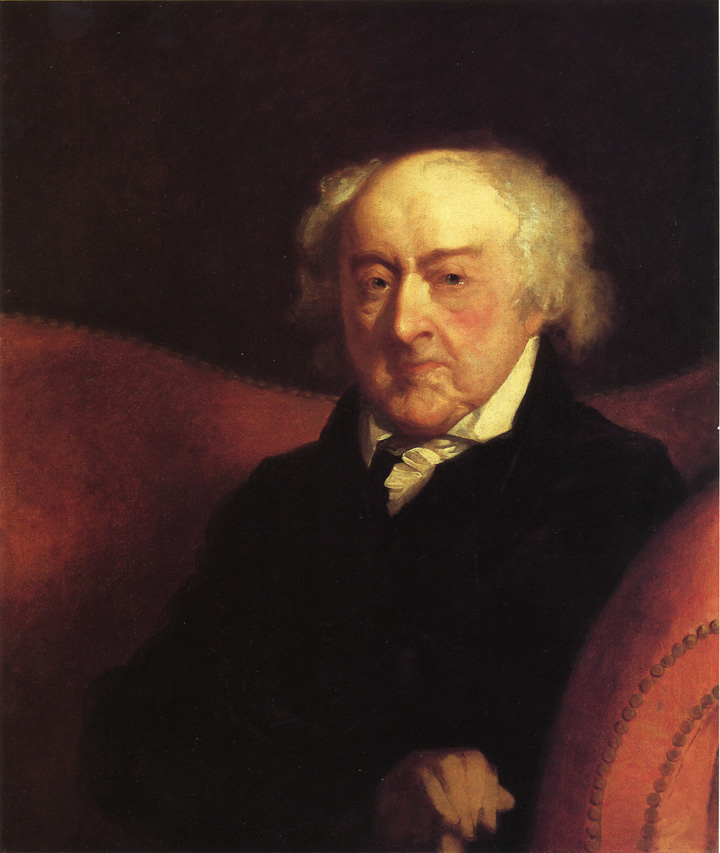
JohnAdamsI always think it’s interesting that George Washington solemnly stated that it would be unwise to have political parties. He thought we should all be Americans and want what’s best for America. Little did he know that Americans disagreed on that score more than on the weather.

John Adams and Thomas Jefferson soon split the country into political parties by their adherence to certain policies. But now . . .

“We expect to find a doctor practicing medicine, a lawyer practicing law, an engineer engaged in engineering, school teachers teaching school; but when it comes to politics, we think there is something reprehensible in the fact that those engaged in politics are politicians!” read more
Freedom, Liberty, and the Founding Fathers

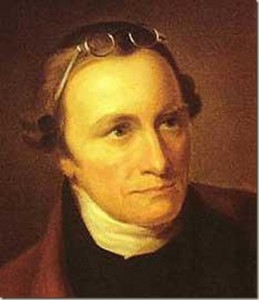
PatrickHenryIt’s interesting how much emphasis and importance all of the Founders put in the idea of Freedom and Liberty. They even warned us to take good care of the things they left for us.
“Is life so dear, or peace so sweet as to be purchased at the chains of slavery . . .?” Patrick Henry.

“It is my full intention to devote my life and fortune in the cause we are engaged in (the Revolution), if need be.” George Washington.

“We hold these truths to be self-evident: that all men are created equal; that they are endowed by their Creator with certain unalienable rights; that among these are life, liberty and the pursuit of happiness.” Thomas Jefferson, in the Declaration of Independence. read more

The Declaration of Independence You Didn’t Know

Thomas Jefferson worked on his draft for 17 days during his time at the Continental Congress. The draft was to be ready in case enough of the representatives ultimately agreed on the need for such a document.

Jefferson’s original draft was just a little different than the one finally adopted. This paragraph is interesting and better than my first draft would have been.

”We hold these truths to be sacred and undeniable; that all men are created equal and independent, that from equal creation they derive rights inherent and inalienable, among which are life, liberty, and the pursuit of happiness.” read more

John Adams and the Law

JohnAdamsAs you may recall, John Adams accepted the representation of the British soldiers who were charged in the Boston Massacre. No other colonist lawyer was willing to accept their representation for fear of losing standing with friends and countrymen.

Adams felt it was his duty as a lawyer, and representative of the judicial system to step in where they needed someone to speak for them; to see that justice was done and not miscarried because of the emotions of the Bostonians at the time.

John did not only an admirable job, he succeeded in have most of the soldiers acquitted under the law. During his argument in December, 1770, he said: read more

Founding Fathers and Bad Press

ThomasJeffersonWith all the politicking going on in the nation today, many think it has actually gotten worse over the years. I’m not sure that’s really the case. When you look at some of the bad press John Adams, Alexander Hamilton, and especially Thomas Jefferson received by the newspapers in their runs for elections, you have to hold your breath.

Most of them tried to make nothing of it—for the most part they ignored it. Thomas Jefferson has an interesting quote regarding what he thought about bad news: read more

Thomas Jefferson as A Speaker

ThomasJeffersonSpeaking of professional speakers, one of the Founding Fathers who wouldn’t be one would be Thomas Jefferson! Although he was very intellectual, wise, and erudite, he was not a good speaker. He could write better than the best of them. But speak he could not, and he knew it. For that reason alone, he probably couldn’t be elected President today.

His voice was high and “squeaky”. He wrote the initial draft of the Declaration of Independence without book or pamphlet as references. Only his background and training as a lawyer guided him through his writing. But he didn’t speak up on behalf of his draft at the Continental Congress. He allowed John Adams to represent him and the committee in advocating adoption of the Declaration. read more

The Revolutionaries and Football

Scene_at_the_Signing_of_the_Constitution_of_the_United_StatesI asked my wife for suggestions regarding what I should write about tonight on my Blog. She said: “Since it’s Monday night football, why don’t you write about what football teams the original Americans would root for.”

I answered: “That would be fun, but football hadn’t been invented yet when they were still around!”

But when I thought about it, I thought “what a good idea!”

Of course, John Adams, being from Boston, and a Patriot himself, would root for the New England Patriots. And, I suppose George Washington would join him, seeing as how Washington, DC hadn’t been built yet. read more

Natural Law and the Declaration of Independence

445192825_011af775a5_mPeople were beginning to talk about the Colonies becoming independent from Great Britain. Unfair treatment of the colonists without giving them any representation in the British body which deliberated the laws, caused many to rebel, rise up, take to the streets, and, yes revolt.

The colonies sent leaders to represent them in a Continental Congress at Philadelphia. At the 2nd Continental Congress the representatives decided to put independence to a vote. A committee was formed to draft a Declaration of Independence should one be necessary. That committee was Benjamin Franklin, John Adams, Roger Sherman, Robert Livingston, and a young lawyer named Thomas Jefferson, who was chosen to write the first draft of such a document. read more

Thanks to the Founding Fathers

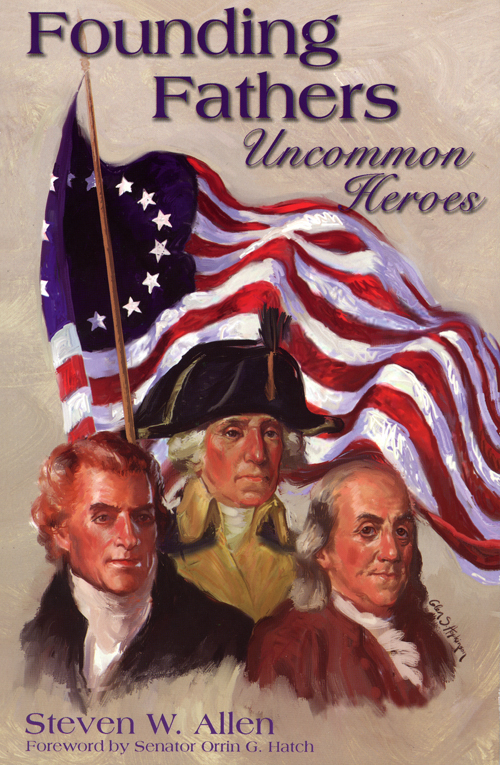
Founding Fathers coverHappy Thanksgiving. As I was writing my report yesterday about how thankful I am for learning about the Illegal Trial of Christ, it occurred to me that I wouldn’t have ever written that book if the distributor for my book “Founding Fathers—Uncommon Heroes” hadn’t known that I had given several presentations about that trial. The distributor knew me well.

When Mel Gibson’s movie “The Passion” came out and was so successful, my distributor called me and said they wanted me to put my material about the trial of Christ into a book. And because of current interest, they wanted it NOW! read more

John Adams and the Constitution

JohnAdamsShortly after the Declaration of Independence was adopted by Congress, Adams was sent to France to join Benjamin Franklin as a minister to France. Congress didn’t invite him to return home, even after the Revolutionary War had ended, and he and Franklin had constructed a Peace Treat, very much in favor of the United States.

Instead they sent him to Great Britain to attempt to produce a treaty of commerce with England. Can you imagine that? To try to put together a new treaty with your most recent war enemy? Impossible. Well, at least terribly difficult. read more