 I know it’s a little bit early yet, but Easter is fast approaching. I have sometimes been asked why I have written my books on totally different subjects. Well, the short answer is my background is in law, therefore the Trial of Jesus Christ became a very real matter of interest to me.
I lived outside of the country for a while which imbued in me a spirit of patriotism. Then when I attended a conference in Philadelphia, in 1976, the Bicentennial of the Declaration of Independence my interest in the Founding Fathers grew by leaps and bounds. I gave many presentations about my heroes, George Washington, Benjamin Franklin, Thomas Jefferson, Patrick Henry, John Adams, and James Madison, to the point where people in my audiences began to ask for me to write a book. So I did.
 John Adams doesn’t get the honor and acclaim he deserves! Even in his lifetime he saw this coming. He said:
 The longest serving Justice on the Supreme Court died today. He had been appointed by President Ronald Reagan. By all accounts he was not only wise and scholarly, he was friendly and had a good sense of humor. He caused the Court to consider carefully what they were deciding, and to look closely at the issues and the deciding factors. Not always apparent in Judges minds.
 The Founding Fathers must have believed a democracy was the way to go, if what they gave us with the United States of America is really a democracy. No on both counts.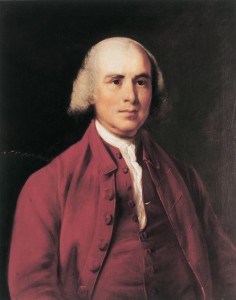
 My wife has been asking me what I want to do now that I’m retired. The other night I woke up at about 2 or 2:30 with a thought on my mind. It seemed important to me at that time in my groggy condition. So what did I do? I got out of bed, went into my office, found a scrap of paper and a pencil and wrote down my thought.
 OK, I didn’t want to read Dinesh D’Souza’s new book “Stealing America.” It sounded too hardboiled a perspective even for me! I admit I did see his documentary about “America, Imagine a World Be Without Her?” And I enjoyed it—especially from the point of view of the Founding Fathers. And then I read the book, too. But wouldn’t “Stealing America” just be too much?
 Many of you are fans of Mary Higgins Clark and her murder mystery novels. What you may not know is that Ms. Clark wrote an interesting book about George and Martha Washington. It’s titled “Mount Vernon Love Story, A Novel of George and Martha Washington.”
 A life lived in liberty