
The Founding Fathers were industrious and positive thinking men. They lived not only fruitful lives, but lives full of activity, wisdom, leadership, and friendship.
 Benjamin Franklin, who took part in most of the life changing events of his time, lived to be 84. He died in 1790.
George Washington, the indispensible man, our nation wouldn’t exist without his accomplishments, died at the age of 67. He died in December of 1799, just before the new century was rung in.
Patrick Henry also died in 1799. He was known as America’s noble patriot and the first national hero. He was only 63 when he left his family of 17 children.
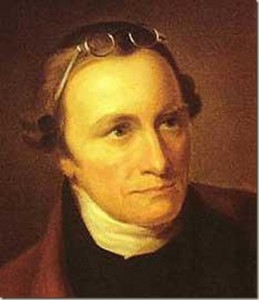 Patrick Henry warned us about losing some of our rights, even with the new Constitution. Yes, just as he warned, I was unjustly and falsely accused of conspiracy to defraud the government. To avoid a possible 37 year prison sentence, I accepted a plea offer. Later I was exonerated when the civil court decided I had done no wrong.
 Franklin had his own “Project for Moral Perfection.” He strived to become as perfect in a dozen different personal character traits as he could be. He made a list and worked on it his whole life. After a short while one of his friends told Ben he should add another trait to his list. That of humility. And the friend proved the need for improvement in that area by citing several examples.
 This week’s commemoration of Good Friday and then Easter Sunday is an important milestone in the Christian Religion. It was honored by our Founding Fathers. Thomas Jefferson said that the “Wee Little Book” he created is “proof positive that I am a real Christian . . . .”
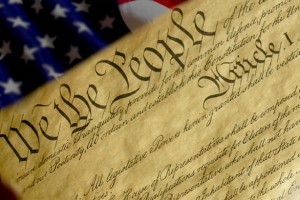 After the Revolution America started off strong. With a new Constitution and President George Washington, this fledgling government was to become a world leader. Can it continue? Or as Benjamin Franklin advised: “We have a Republic—if you can keep it.”
 One of the virtues our Founding Fathers are known for, is Kindness. Thomas Jefferson was known to receive visitors to the President’s Mansion without prior announcement or request. He was always polite and gracious to his visitors.
 C. S. Lewis, a Christian Writer (The Chronicles of Narnia) of his day (1898-1963) had an interesting way of explaining things. Another writer said of him: “The mere Christianity of C. S. Lewis is not a philosophy or even a theology that may be considered, argued, and put away on a shelf (kind of like our debate about being a Christian nation).
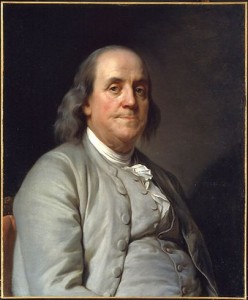 For Benjamin Franklin debates about religion were counterproductive. He always tried to shy away from taking a stand when such matters came up in his presence. He had distinct view, but preferred to keep them to himself. However his writings are full of his thoughts about character, belief, religion and even chastity.
 In another one of his books, “The Path to Prosperity” he gives this wise counsel: “Money does not constitute true wealth, nor position, nor power, and to rely on it alone is to stand upon a slippery place.