 There are those who deem it necessary to besmirch the characters of GREAT men in the history of the Unites States. Much that is untrue has been said or written about Thomas Jefferson, Benjamin Franklin, and yes, even George Washington.
I do not know why some have chosen this path. I do know that it is tasteless, unseemly and unacceptable. We should have our heroes to look up to and fashion our own character about. By tearing them down, we do NOT lift ourselves up.
I have created a chapter in my book “Founding Fathers—Uncommon Heroes” to “debunking the rumors” and Myths about our heroes of history.
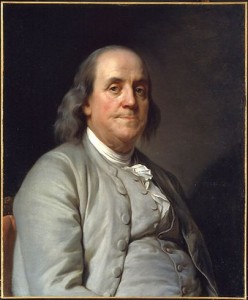 Franklin didn’t have much of a formal education, but he had a lion’s share of personal experience and the use of knowledge. But he did have some strong opinions on education for American children.
 He had some interesting help along the way. Alexander Hamilton, James Monroe, General von Steuben, Nathan Hale, and even Thomas Paine. Paine was there when Washington crossed the Delaware for that famous battle of Trenton (and Princeton).
 The parents of Benjamin Franklin don’t receive much fanfare, notoriety, or acclaim about the lives they lived. Ben talks a little about them in his Autobiography. One of the things they taught Ben was to obey the commandments of God. As a result, he did honor them. After all, Honor thy Father and Mother is the first commandment with a promise—that your life may be long in the land.
 This home is where the Henry’s lived when Sallie Henry, Patrick’s first wife, became ill and eventually died. She died about 5 weeks before Patrick gave his immortal speech “Give Me Liberty.” Patrick had to ride horse-back from Scotchtown to Richmond, Virginia, a distance of about 28 miles, (just over a half hour by car—but Patrick went on his horse!) to attend the meeting where this speech was given.
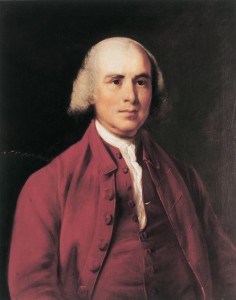 There is much talk these days about our U.S. Constitution. There is not as much talk about the “Father of the Constitution” as James Madison is known. He is, after all, the one who got the framers together to amend the Articles of Confederation. And that took some doing. George Washington didn’t want to attend—he didn’t think it could be successfully accomplished!
 John Adams as you know, was elected to succeed George Washington as the President of the United States of America. He had had a great deal to do with the creation of this new nation. He doesn’t get remembered too much for his contributions. He knew it would be that way.