Patrick Henry’s Claim to Fame

PatrickHenryMost people today don’t know very much about Patrick Henry. Through my study of the Founding Fathers, he has become one of my favorites. He had much to say to us and to do for us. Not the least off which was his example of good character.

Perhaps a fitting epitaph of this amazing man is the one paid to him by his grandson who described Henry as always setting “a good example of honesty, benevolence, hospitality and every social virtue. He assisted in the education of his . . . children and especially devoted much time to earnest efforts to establish true Christianity in our country.” read more

President and Mrs. Washington and President and Mrs. Madison

There is a touching and even heart-rending irony in that neither George Washington, the “Father of our Country” nor James Madison, the “Father of the Constitution” had any children of their own. However, they both married widows and raised step-children.

George Washington married Martha Dandridge Custis, the lovliest and perhaps the wealthiest widow in Virginia. Martha had two children with her previous husband, Daniel Custis. Martha was very beautiful, as science has now confirmed with the new methods of reproducing what someone would have looked like at a certain age. (Click here to see a picture). At barely 5’, Martha stood only as tall as Washington’s chest. George was nearly 6’4” tall. read more

Governor Patrick Henry, Give Me Liberty . . .

PatrickHenryI can recall a time after High School, when I could sort of remember the name of Patrick Henry. I even knew that he gave a monumental talk at some point in his life where he said the words: “Give me liberty . . . or give me death!”

I didn’t know when he gave that speech, or where it occurred. But I seemed to think it was sometime around the Civil War period. As you can guess, history was not my favorite subject in High School.

Then in 1976, yes, 1976, as a young attorney, I was elected to represent a Phoenix Mayor’s committee at a National Convention of Citizens Crime Commissions, to be held in Philadelphia, Pennsylvania that year. For those of you who weren’t around then, that was our Nation’s Bi-centennial celebration of the adoption of our Declaration of Independence. read more

Benjamin Franklin’s Airbaths

Ben FranklinFranklin had a habit of engaging in a daily “Air Bath.” When Ben would arise every morning, he would open every window in his room, remove all of his clothes and sit around in the room for an hour or so in the “altogether”. Not even cold winter weather would discourage him in this practice.

He often recommended this practice to his friends or fellow traveling companions. He once told John Adams that this was the reason he rarely suffered from a cold. John Adams, however, couldn’t quite convert to it! read more

Thomas Jefferson, Books and Learning

ThomasJeffersonOne of Thomas Jefferson’s personal characteristics was that he was a sponge for learning. Even as a youth he was so inquisitive that he was such a good student, the classes didn’t go fast enough for him.

He graduated college at William and Mary in Williamsburg, Virginia, and then continued to study law with George Wythe, who became the first law professor at that college. Wythe later became one of the signers of Jeffferson’s Declaration of Independence.

In Jefferson’s Monticello, his mansion near Charlotte, Tom kept several different locations available for him to sit and read and study at the drop of a hat. He wrote to John Adams: “I cannot live without books.” His collection of books exceeded that of the Congressional Library, which was burned  in the War of 1812, and replaced by Jefferson in 1814. read more

Jefferson and Listening

ThomasJeffersonThomas Jefferson served with Patrick Henry and George Washington in the House of Burgesses. He served later in the Continental Congress with Benjamin Franklin. One thing Jefferson learned from these three men, and especially Franklin and Washington, was how to listen. George was especially adept at this trait.

Jefferson made it a point not to argue and to try to be a peacemaker. Of his experience in Congress he wrote in his autobiography:

“Our body was a little numerous, but very conscientious. Day after day was wasted on the most unimportant questions. A member, one of those afflicted with the morbid rage of debate, of an ardent mind, prompt imagination, and copious flow of words, who heard with impatience any logic which was not his own, sitting near me on some occasion of a trifling but wordy debate, asked me how I could sit in silence, hearing so much false reasoning, which a word would refute? I observed to him, that to refute indeed was easy, but to silence was impossible.” read more

Freedom, Founding Fathers, and The Trial of Christ

HeaderIt’s hard to explain, especially in just a few words, but I’ll try. People always ask me why I wrote my books in such seemingly different areas or topics.

My first book, “Founding Fathers—Uncommon Heroes” is a book with chapters about six of our Founding Fathers. Men who had the courage to establish the United States of America. The six men are Benjamin Franklin, George Washington, John Adams, Thomas Jefferson, Patrick Henry, and James Madison.

My second book, “The Illegal Trial of Christ,” came at the request of my publisher, who knew I gave popular presentations about this topic. This book includes biographical information about the many players involved in the four trials that took place at the end of Christ’s life. In this book I also explain some of the rules, procedures, and laws in effect at that time. Both Roman law and Hebrew law. By understanding these people and their circumstances, readers will come to recognize and grasp why some things are worded the way they are in the four Gospels. read more

John Adams and the Declaration of Independence

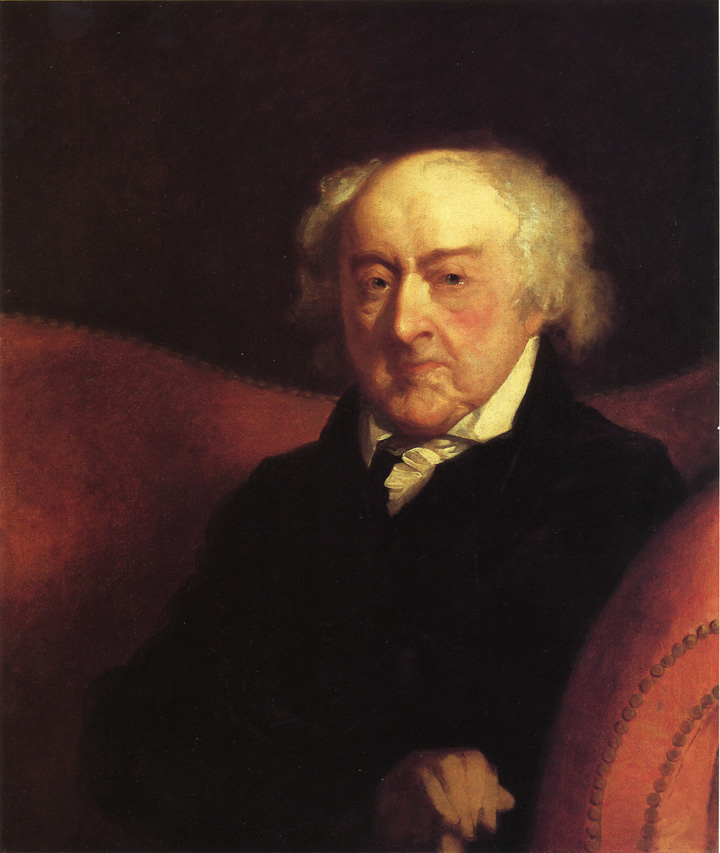
JohnAdamsJohn Adams, a lawyer, was truly at the front of the happenings of the Revolution with England. He wrote the pamphlet that had wide circulation and among others, caught the eye of Patrick Henry prior to his own Give Me Liberty speech.

John was a minister to France capturing a loan from Amsterdam which pretty much saved the Colonies in the war. He became the second President of the United States of America, upon the retirement of General George Washington.

What we sometimes forget about John is that he was the one who defended Thomas Jefferson’s draft of the Declaration of Independence at Philadelphia in 1776. Tom called him the “Colossus” for his vigorous defense. He carried the day and the Declaration was adopted. read more

The Least Known Founding Father

PatrickHenryIn speaking around the country, I am surprised to find that the least know of the Founding Fathers is Patrick Henry. Sure, people have heard of him, but know nothing about his life. Some people know he gave a speech once where he said those immortal words: “Give me Liberty or Give me Death!” Where and when and why no one seems to know. Some even think it was around the time of the Civil War.

Patrick Henry gave many speeches. Not the least of which was the first speech he gave as a newly elected member of the House of Burgesses, the civilian legislature approved by the Crown of England. It was that speech that Thomas Jefferson said lighted the light of liberty in his breast, never to be quenched. He was first a close friend of Thomas Jefferson, and during the Revolutionary War they became estranged enemies. read more

Favorite Founding Father

Ben FranklinI have given many presentations about the Founding Fathers. I am the author of “Founding Fathers –Uncommon Heroes.” As I have spoken, many have asked “Who is your favorite Founding Father?”

That’s such a difficult question, I answer: “When I am speaking about George Washington, he’s my favorite. When I am talking about Thomas Jefferson, he’s my favorite. When I speak about Patrick Henry, he’s my favorite. When I am discussing John Adams, he’s my favorite. And when I speak about James Madison and Dolley Madison, they are my favorites.” read more