The Washington Hypothesis –One More Time

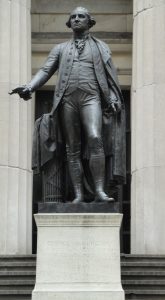
George_Washington_Statue_at_Federal_HallBy now you know I enjoyed reading Timothy Ballard’s “The Washington Hypothesis.” It gave me some new insights. One particular part of the hypothesis is the reference to the Bible. When George Washington was given the Oath of Office as the new First President of the United States of America, he asked that a Bible be produced so that he could receive the Oath as a Covenant.

The man, the Mason, who ultimately presented the Bible, apparently took care to mark where George opened the Bible and placed his hand. There is only one place in the Old Testament which can be easily interpreted to be prophesying about the new Promised Land. read more
The Washington Hypothesis–One More Time

By now you know I enjoyed reading Timothy Ballard’s “The Washington Hypothesis.” It gave me some new insights. One particular part of the hypothesis is the reference to the Bible. When George Washington was given the Oath of Office as the new First President of the United States of America, he asked that a Bible be produced so that he could receive the Oath as a Covenant.

The man, the Mason, who ultimately presented the Bible, apparently took care to mark where George opened the Bible and placed his hand. There is only one place in the Old Testament which can be easily interpreted to be prophesying about the new Promised Land. read more

More Washington Hypothesis

George_Washington_Statue_at_Federal_HallI finished the book “The Washington Hypothesis” with an even greater admiration for George Washington. The hypothesis included the question whether or not George knew that he was in the middle of something big. Did he know that he was creating essentially a new exodus from the promised land, or creating a new promised land, like Moses?

How much did Washington really know? What was his relationship with the Masons? What do all the symbols mean surrounding the development of Washington, D.C.? Is everything in our early history just one huge, unbelieveable coincidence, or something greater? How many times was the fledgling nation saved by miracles? These are just some of the questions. read more

Patrick Henry, Thomas Jefferson, James Madison and the Constitution

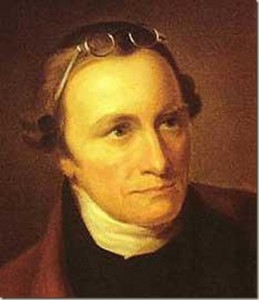
PatrickHenryThose Founding Fathers who were against the U.S. Constitution included Thomas Jefferson, and Patrick Henry. Both of them thought that the Constitution did not protect the average citizen enough.

Jefferson was still in France, but sent his reservations by letter to his friend James Madison, the Father of the Constitution. He encouraged James to continued to fight for a Bill of Rights.

Patrick Henry opposed the Constitution in the Constitutional Assembly held in Virginia to vote on the document. He made several long speeches against its adoption, some lasting all day. He made at least one speech almost every one of the 17 days of the State Convention. He also wanted a more specific Bill of Rights. read more

Happy Father’s Day!

GeorgeWashingtonI want to wish all you Fathers a Happy Father’s Day, 2016! Being a father myself, I know how good it makes you feel to be acknowledged as a good father.
But did you know that two of our nation’s Founding Fathers, were indeed Founding Fathers, but they had NO children of their own?

Yes, it’s true. George Washington, known as “The Father of our Country, did not have any children of his own. Martha had children when they were married. She was a widower. But George gave her no children.

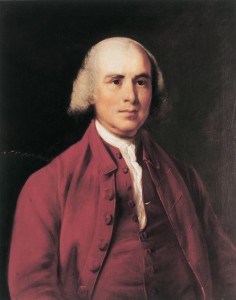
JamesMadisonAnd James Madison, known as “The Father of the Constitution” also had no children of his own. He married Dolley Madison, who had children from a prior marriage, and who, like Martha Washington, was a widow when she married James Madison. He helped raise her children, but again they had no children together. read more

George Washington as a Leader

Landsdowne paintingWhen the U.S. Constitution was ratified and George Washington was elected as the first President of the United States of America, not only was a new nation created, but also a new culture.
This new nation was based on the founding principles of honesty, human rights, and virtue. The nation provided as John Adams described it: “a light on a hill” for all to look to admire, and duplicate. There was an excellence for other nations, and peoples, to strive after.

The creation of the United State of America gave other nations an understanding that the United States of America is a place where people could be free. They would be free to practice their religion as they chose, free to think whatever was on their minds, and even free to speak those thoughts. read more

More of The U. S. Constitution Amended

constitutionYesterday I wrote about the amendment amending an amendment to the Constitution. I hope you read about it. Today more about Amendments.

You’ll probably remember that the Equal Rights Amendment was not ratified in the time required by the Amending process in effect. There was just too much uncertainty about how it would affect certain parts of our normal lives—so in the wisdom of the original Signers of the Constitution it was not approved.

What you may not know concerns the most recent Amendment. That is Amendment 27. This Amendment requires that “No law, varying the compensation for the services of the Senators and Representatives, shall take effect, until an election of Representatives shall have intervened.” read more

Amending the U.S. Constitution as Amended

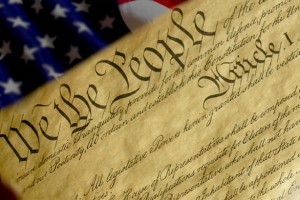
constitutionThere have been 27 Amendments to the U. S. Constitution since it was ratified in 1787. That’s pretty remarkable when you stop to think about it. Twenty-seven changes to a document creating a new Nation!

And one of those amendments was to revoke a prior amendment. There’s been only one time in the history of our country when one amendment was confirmed in order to strike out an earlier change. That, of course, was in 1933 when the twenty-first amendment was adopted in order to repeal the eighteenth amendment. read more

James Madison and the Constitution

PatrickHenryBack when the Eastern coast of America was only an unofficial assemblage of British colonies, there were some major disturbances in Boston. Because of communication between some of the leaders, some individuals decided to do something.

When the King’s appointed governor of the Colony of Virginia confiscated the gunpowder magazine, the building containing the colonist’s gunpowder, some of the leaders objected. The building was in the capitol of Virginia at Williamsburg.

One of those leaders was Patrick Henry, who assembled a group of farmers, merchants, and yes, even lawyers, to march on Williamsburg and recapture the magazine. With guns. As they marched toward Williamsburg the group of “militia” grew in size. It grew to a troop of about 5,000 men. read more

Battle for Independence

Ben Franklin thumb pictureYou may have missed it but the Revolutionary War ended in 1781 at Yorktown, VA. The particulars of that battle were amazing. So was the outcome. British General Cornwallis surrendered his army after the valiant efforts of the Americans and the French.

After the defeat at Yorktown, a friend of Benjamin Franklin approached him and said: “It looks as if the battle for independence is finally over.”

Franklin replied: “Sir, you are mistaken. The Revolutionary War may be over, but the battle for independence has just begun.” read more