 Benjamin Franklin did not, no he didn’t, write the first American novel. However, as a printer, he did publish the first novel in America. The first novel written in plain English was “Pamela” by Samuel Richardson. That was published in London in 1742. Benjamin Franklin brought it to America and published it himself in his printing shop in 1744.
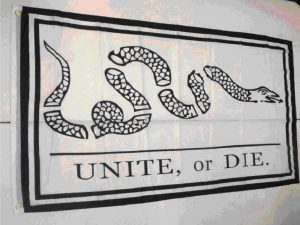
Franklin was a very successful printer. He also published the first political cartoon. We should pay some attention to it today with the current repercussions from our Presidential election. As the French and Indian war was beginning, Franklin was again at the forefront. In Albany, New York, in 1754, Ben proposed a union of all the colonies to Congress at that city.
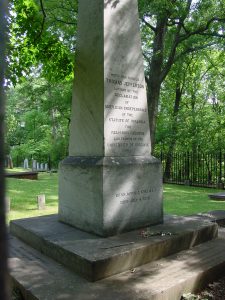 Some say that whatever a man has decided to have placed on his tombstone says a lot about what that man considered to be of greatest importance in his life. Knowing that you would think that a man who accomplished as much in his life as did Thomas Jefferson would need a large grave marker. Or perhaps he’d need several tombstones to give the full story.
 We don’t give much attention to Thomas Paine these days. He was from England and had tried to make a living alternatively as a grocer, a Methodist preacher, an excise officer, an English teacher and a writer. He wasn’t much of a businessman as you can see, and he had a difficult time relating to others. However, he was a creative and imaginative literary mastermind.
 However, the original Patriots didn’t play football. Football hadn’t even been invented yet. Those original Patriots played for keeps and they created a new nation. The first one ever to be of the people, by the people and for the people.
 I am a long time football fan and a patriot. I love to watch football games, NFL, Colleges, even some high school. I also love our country. The Pledge of Allegiance is special to me. We said it every morning while standing in our classrooms, hands over our hearts, facing the flag, in elementary school. Then somewhat less in high school.
 George Washington, our first President, said this: “Government is not reason, it is not eloquence, it is force; like fire, a troublesome servant and a fearful master. Never for a moment should it be left to irresponsible action.”
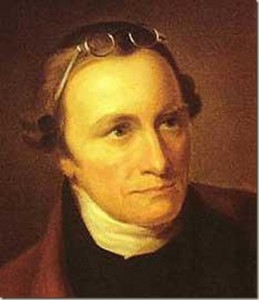 I’m going to break with tradition a little bit tonite and quote a little bit from my upcoming book, “A Patriot in Prison.” I believe Patrick Henry will be proud of this book, since he was a great champion of the Grand Jury system—as it was in his day!
 Most of us remember a little bit about the Revolutionary War as we learned it in our youth. We can recall the heroic efforts of Colonel Knox at Boston as he was requested to recover lost cannon and other materiel lost at Fort Ticonderoga. We remember the victory at Dorchester. Then the move to New York, where George and his valiant soldiers were chased from Long Island, lost at several posts along the retreat, and moved to New Jersey.