 Franklin, of course, was first a printer. And a good one at that. Of course he needed things to print in his newspaper. He loved good stories. He even made some up—especially to discourage the British in the Revolutionary War.
Did he go too far? Only you can decide. In 1789, the year before Ben died, a newspaper article was printed in which Ben is reported to have said:
“My proposal, then, is to leave liberty of the press untouched, to be exercised in its full extent, force and vigor, but to permit liberty of the cudgel (which is a short and heavy club, for those of you who can’t remember your high school English) to go with it . . . .Thus, my fellow citizens, if an impudent writer attacks your reputation, dearer to you perhaps than your life, you may go to him openly and break his head.” (Clarence S. Brigham, Journals and Journeymen, Philadelphia: University of Pennsylvania Press, 1950, page 69. Emphasis omitted, spelling and capitalization modernized. read more
 On this our 4th of July, or our Independence Day weekend, I am sorely reminded of the quote of Abigail Adams. As you know, she was the wife of John Adams, who argued on behalf of accepting Thomas Jefferson’s draft of the Declaration of Independence. As a result he was nicknamed “the Colossus” by Jefferson.
 Albert Einstien was once an avowed atheist. After study and consideration, he seemed to change his tune. Here’s what he said:
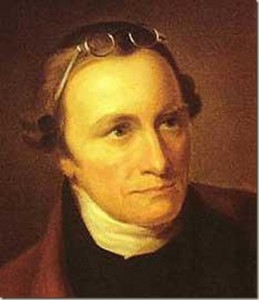 Those Founding Fathers who were against the U.S. Constitution included Thomas Jefferson, and Patrick Henry. Both of them thought that the Constitution did not protect the average citizen enough.
 When the U.S. Constitution was ratified and George Washington was elected as the first President of the United States of America, not only was a new nation created, but also a new culture.
 I was looking for something nice to say on this Memorial Day weekend. In my favorite quote books there wasn’t much between memory and virtues. But I did find this quote which really touched a nerve and I thought should be considered in our nation on this day we celebrate some heroes.
 “Tact is the ability to see others as they see themselves.”
 Thomas Jefferson should truly be remembered and honored today. What did he accomplish? I’ll just mention a few here. He graduated from William and Mary College and then studied law for 5 years under George Wythe, the first law professor in Virginia.