 Last night my blog was all about the ages of some of the Founding Fathers. Tonight it is about You! What can you learn from their lives. Here is a poem to express that just a bit:
“You are old, Father William,” the young man cried.
“The few locks that are left you are gray.
You are hale, Father William, a hearty old man;
Now tell me the reason, I pray>”
“In the days of my youth,” Father William replied,
“I remembered that youth would fly fast;
And abused not my health and my vigor at first,
That I never might need them at last.”
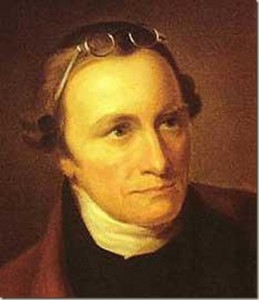 Patrick Henry warned us about losing some of our rights, even with the new Constitution. Yes, just as he warned, I was unjustly and falsely accused of conspiracy to defraud the government. To avoid a possible 37 year prison sentence, I accepted a plea offer. Later I was exonerated when the civil court decided I had done no wrong.
 Benjamin Franklin’s Advice
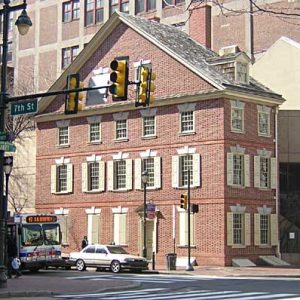 It’s absolutely a fact that the Declaration of Independence was written by Thomas Jefferson, in Philadelphia. Jefferson was a member of the committee assigned by the Continental Congress to create such a document if one should be needed. The committee was made up of Benjamin Franklin, John Adams, Thomas Jefferson, Robert Livingston, and Roger Sherman. They chose Jefferson to write the draft for their review and approval. He did. At the Graff House. The committee approved it with only minor changes.
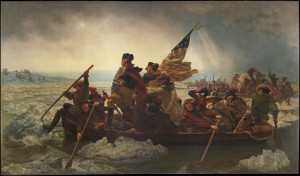 In the Revolutionary War the battles generally stopped in the winter months. That was mostly because of the cold and wet weather. George Washington didn’t consider that in his quest to cross the Delaware River and attack the British forces with the Hessian soldiers who were camped at Trenton, New Jersey. The main British army had stopped for rest, dining and dancing somewhat earlier.
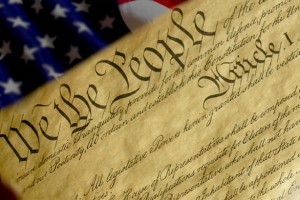 In this Easter season I’ve been posting about the Illegal Trial and Crucifixion of Jesus Christ. It all began because all Hebrew authority was concentrated in their Great Sanhedrin (they were allowed to govern themselves as a ‘client state’ of Rome). There were no checks and balances. Christ was found guilty of blasphemy.