 This week’s commemoration of Good Friday and then Easter Sunday is an important milestone in the Christian Religion. It was honored by our Founding Fathers. Thomas Jefferson said that the “Wee Little Book” he created is “proof positive that I am a real Christian . . . .”
Benjamin Franklin’s “Project for Moral Perfection” had him working on his character to imitate the humility of Jesus. George Washington paid for his own seat or booth at the Christian Church in Alexandria which was close to Mount Vernon.
 It doesn’t get much notice these days, but John Adams actually had quite a bit to do with our country becoming independent. One very interesting letter was written by Adams in support of William Hooper’s (William Hooper, who’s he?) preparation of a new written constitution for the State of North Carolina. This letter was later published by a Philadelphia printer. Here’s one sample paragraph:
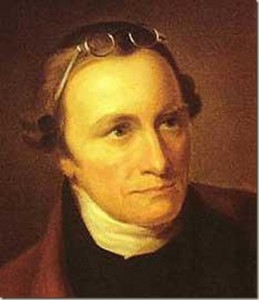 The Second Continental Congress was called on May 10, 1775, in Philadelphia, Pennsylvania. Patrick Henry was elected by the people of Virginia to represent them at their own State convention. It wasn’t even a State yet! But that’s why Patrick Henry stayed home rather than attend the continuation of the Second Continental Congress like Thomas Jefferson, John Adams, and Benjamin Franklin.
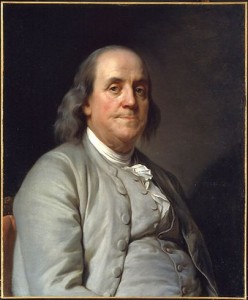 “Up, sluggard, and waste not life; in the grave will be sleeping enough” Benjamin Franklin. He also wrote: “Early to bed, early to rise, makes a man healthy, wealthy and wise.”
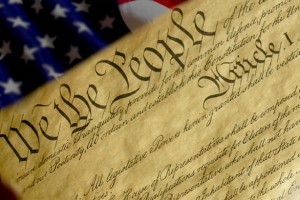 After the Revolution America started off strong. With a new Constitution and President George Washington, this fledgling government was to become a world leader. Can it continue? Or as Benjamin Franklin advised: “We have a Republic—if you can keep it.”
 Sometimes the ones in the right must stand up to the Bullies in the wrong!
 In Benjamin Franklin’s “Project for Moral Perfection”, character trait number 11 was “Tranquility.” He defined it as “Be not disturbed at trifles, or at accidents common or unavoidable.”
 One of the virtues our Founding Fathers are known for, is Kindness. Thomas Jefferson was known to receive visitors to the President’s Mansion without prior announcement or request. He was always polite and gracious to his visitors.
 Benjamin Franklin told some of his closest associates that his favorite Book in the Bible, was the Book of Proverbs. That book is deemed by scholars to have been written by King Solomon. And Ben loved Solomon. You can tell by reading that Proverbs was even the source for some of Franklin’s adages and quotes in his “Poor Richard’s Almanac.”