
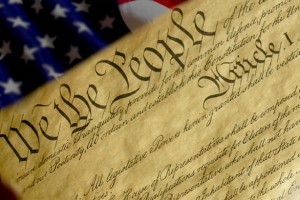
 There is something I just can’t understand—at all! Yesterday in my blog I gave some little bit of background about our U.S. Constitution. I mentioned that our Constitution has been amended only 17 times since the original Bill of Rights was adopted. Seventeen times since December 15, 1791. That’s more than 225 years.
But two of those amendments came in 1913. What happened in 1913 that allowed those two amendments to be approved? Woodrow Wilson was president and started the “progressive” movement. Which shortly died out for a while, but it’s back now—with a vengeance. Just look, we have our first openly socialist candidate.
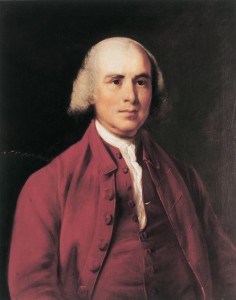 We discussed the War of 1812 just a few blogs ago. This was sometimes referred to as Madison’s war. It occurred during Madison’s second term as President, and the U.S. won, again. We later adopted the Star Spangled Banner as our national anthym. I hope you enjoyed the information.
 You hear a lot of good things about Founding Father Benjamin Franklin. But usually you don’t equate him with being a good manager. Just look at his success with the printing business from which he retired in his fifties.
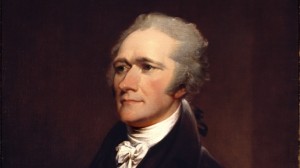 In the last few blogs, I have focused a little on Washington and the Battle of Trenton. The miraculous battle was immortalized by that painting of Luetze of Washington crossing the Delaware. You’ll remember that in that battle Alexander Hamilton was one of the young soldiers who helped create the victory.
 George Washington could teach all our politicians a thing or two—of course they’d have to listen. George was taught penmanship by a mentor or tutor when he was still quite young. His teacher taught him how to write in beautiful script which was plain and easy to read. George had good penmanship throughout his life.
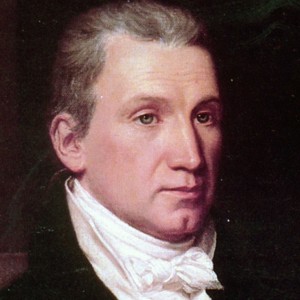 I would like to remind you of the acts of two of the other great American heroes of the Revolution who took part in that battle. The Battle of Trenton.
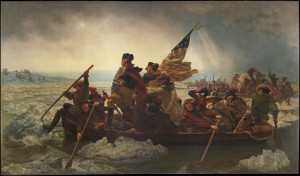 Many know of the miraculous march on the British stronghold at Trenton on Christmas night, 1776. You have most likely seen the beautiful painting by Emanuel Leutze in 1851, depicting the crossing of the Delaware River to stealthily approach the Hessian soldiers who were camped there.