
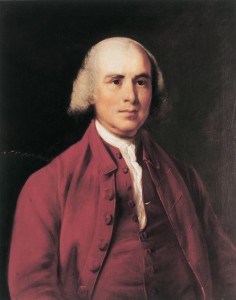
 As funny as it may seem, one of the questions that I asked the Senior Advanced Placement Government class when I was a guest instructor for an hour, was “When was the War of 1812?”
There were some confused faces in the classroom. What was that war all about? Who started it? Who won? When? They finally did come to the conclusion that the War of 1812 was actually in 1812, but they really didn’t know much about it.
That’s not unusual, I’m told. Sometimes referred to as Madison’s War, it was declared in June of 1812 at President James Madison’s request. Congress declared war because the British had incited the Indians to fight against the U.S., they had interfered with American merchants and had actually forced some American sailors into service for the British!
In August, 1814, President Madison received news that the British troops had landed in Maryland and were now advancing towards Washington, DC.
Indeed, they took over the Capitol city and burned the President’s Mansion as it was then known. They also burned the Treasury Building, the War Building, and the Capitol Building, including the Congressional Library.
But the plunder of the city was miraculously cut short. Storm clouds, which had been gathering over the city, were suddenly opened and poured torrential rain upon the Redcoats and their mischief. If that wasn’t enough, hurricane force winds blew in from the ocean. Thunder seemed to shake the whole city.
The courage of those British soldiers began to falter as the fires, the gale forced winds, and the fighting caused many of the ravaged building to crumble. Many of the Redcoats became trapped in the rubble and under the devastation.
Lightning lit up the sky. A rumor began to circulate among the soldiers that the Americans were now surrounding the city and would soon attack. Overcome by fear, the British army retreated and left Washington, DC just one day after their huge apparent victory.
In January 1815, the whole tide of the War was altered when General Andrew Jackson defeated the British army at the Battle of New Orleans. Ten days after receiving news of this great triumph, Madison acquired even more welcome messages. It was told that a peace treaty had been signed at Ghent, Belgium. The War of 1812 was over.
America had won a second war for freedom from the British! It was wonderful news.
You will, of course, remember that one of the bi-products of that war was the introduction of our national Anthem, “The Star Spangled Banner.” But that’s a whole other story.
-

By: Steven W. Allen, J.D.
Steven W. Allen, J.D. is an author, speaker, and retired attorney. His book “Founding Fathers – Uncommon Heroes” is popular with all ages and is used in many schools. See his other books at www.StevenAllenBooks.com
-


-
The Federalist Papers
Constitutional Amendments
Founding Fathers and American Heroes
Founding Fathers and War
What About Benedict Arnold?
Books and Founding Fathers