 Sing Songs of Gratitude
On this beautiful Thanksgiving Day, We should be grateful that President Abraham Lincoln declared this day a national holiday. I have been impressed by the great blessings I have received in my life. Big and small. Some I didn’t think of as blessings at the time, still turned out for the best, or for my needed experience. Perhaps you feel the same.
That caused me to think of a song I learned in my youth. It goes something like this.
“When upon life’s billows you are tempest-tossed,
When you are discouraged thinking all is lost,
Count your many blessings; name them one by one,
And it will surprise you what the Lord has done.
 “The requests to put the information shared in my presentations into book form have become more persuasive and have increased in persistence. I was finally convinced to give it a try. I turned to my friend and editor, Rosemary Green, for her assistance. She has taken my sometimes convoluted notes, disjointed outlines, and rudimentary book drafts and through her care, close attention, and long-suffering has turned them into this book.
 The football game between Southern Methodist University and Notre Dame had just begun when the Fighting Irish scored a touchdown. A spectator immediately jumped to his feet, yelled in an unabashed tone and patted his neighbor on the back.
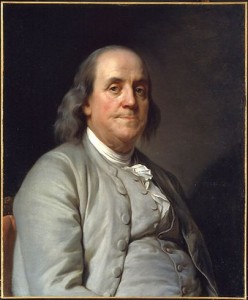 We know that Benjamin Franklin was a great scientist, inventor, printer, businessman, diplomat, horseman, ambassador, mentor, public servant, and Founding Father. But we don’t often think of him as an author. But we should.
 When John Adams was still a young attorney, the Boston Massacre took place. No lawyer wanted to defend the British soldiers that were accused of murder in the case. John Adams eventually learned that the whole matter would probably end with the British being found guilty. Because his cousin Sam Adams was there, John knew some of the facts. He also knew that no one would defend the soldiers.
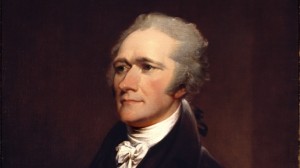 Alexander Hamilton was a favorite of General George Washington. Few remember that Hamilton was with Washington as he crossed the Delaware and captured the Hessian fighting force at Trenton in December, 1776. Hamilton actually lit the touchholes with the flames that fired the canon at the Hessian barracks that night. James Monroe, the future President, was in charge of the charge. You remember, they won that battle and much later went on the win the Revolutionary war.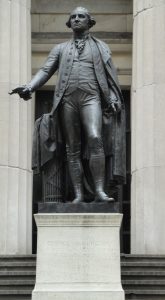
 The past few days so many editorialists and commentators have touted that we have a great democracy. I must remind you once again, we, in America, do NOT have a democracy. Remember how after the Constitution was finally approved by the Constitutional Convention in 1787, Benjamin Franklin was asked “what was the result of the deliberations. What kind of government do we have?”