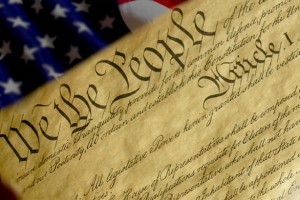
More of The U. S. Constitution Amended

constitutionYesterday I wrote about the amendment amending an amendment to the Constitution. I hope you read about it. Today more about Amendments.

You’ll probably remember that the Equal Rights Amendment was not ratified in the time required by the Amending process in effect. There was just too much uncertainty about how it would affect certain parts of our normal lives—so in the wisdom of the original Signers of the Constitution it was not approved.

What you may not know concerns the most recent Amendment. That is Amendment 27. This Amendment requires that “No law, varying the compensation for the services of the Senators and Representatives, shall take effect, until an election of Representatives shall have intervened.” read more
James Madison and the Constitution

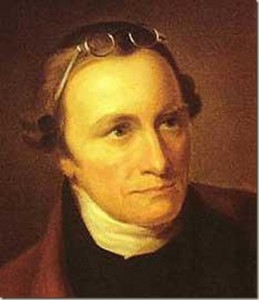
PatrickHenryBack when the Eastern coast of America was only an unofficial assemblage of British colonies, there were some major disturbances in Boston. Because of communication between some of the leaders, some individuals decided to do something.
When the King’s appointed governor of the Colony of Virginia confiscated the gunpowder magazine, the building containing the colonist’s gunpowder, some of the leaders objected. The building was in the capitol of Virginia at Williamsburg.

One of those leaders was Patrick Henry, who assembled a group of farmers, merchants, and yes, even lawyers, to march on Williamsburg and recapture the magazine. With guns. As they marched toward Williamsburg the group of “militia” grew in size. It grew to a troop of about 5,000 men. read more

James Madison and the Bill of Rights

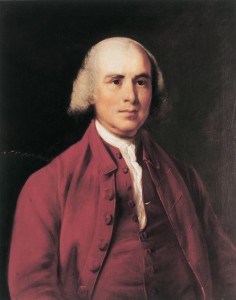
JamesMadisonThe Constitution was undeniably the idea, design, and proposal of James Madison, but so also was the Bill of Rights. The first 10 Amendments to the Constitution. Once the Constitution was ratified and signed by the 55 Representatives of the States in Congress, it had to be approved by each of the States individually.
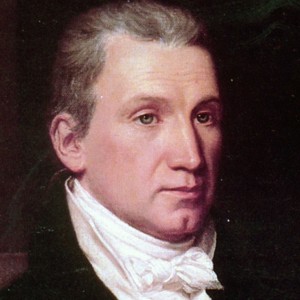
In an effort to gain the votes of the States, Madison, together with John Jay and Alexander Hamilton wrote the “Federalist Papers” to fully explain the meaning and importance of the Constitution. Nine State had to adopt it before the Constitution would replace the Articles of Confederation as the principle document uniting the States. read more

Founding Fathers—Uncommon Heroes

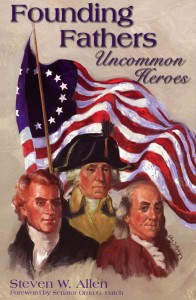
Founding Fathers coverThe Founding Fathers were patriots. The root word of ‘founding’ is ‘found’, which means to “take the first steps in building”. The first builders of the nation. The use of the word ‘father’ in this sense means originator. They began the whole thing.
In this context, a father is one who has become one of the leading men as of a country. Just like a man is a father to a boy. The originator, the starter, the one who sees it through.

The way we use these words together today refers to the men who were there at the beginning of our new nation. The ones who originated or started the process of building a new nation. Nation means a politically organized community. read more

Citizens Amend the Constitution

constitutionThere is something I just can’t understand—at all! Yesterday in my blog I gave some little bit of background about our U.S. Constitution. I mentioned that our Constitution has been amended only 17 times since the original Bill of Rights was adopted. Seventeen times since December 15, 1791. That’s more than 225 years.

But two of those amendments came in 1913. What happened in 1913 that allowed those two amendments to be approved? Woodrow Wilson was president and started the “progressive” movement. Which shortly died out for a while, but it’s back now—with a vengeance. Just look, we have our first openly socialist candidate. read more

The U. S. Constitution and Its Amendments

constitutionThere has been much talk in the recent political arena about protecting the Constitution. There hasn’t been much talk about the Constitution itself and what it says or means. I sometimes wonder how much politicians, Senators, Representatives, Judges and even citizens really know about the Constitution. But it does make for a good sound bite.

When I think about the Constitutional Convention in Philadelphia in 1987, I am amazed that it even got ratified. There was much debate and disagreement. The room at Independence Hall was locked and the windows closed so the people wouldn’t see the contention in the debates. (Think of the televised debates today!) read more

James Madison’s War

JamesMadisonWe discussed the War of 1812 just a few blogs ago. This was sometimes referred to as Madison’s war. It occurred during Madison’s second term as President, and the U.S. won, again. We later adopted the Star Spangled Banner as our national anthym. I hope you enjoyed the information.

Also during Madison’s second term a new word emerged in our vocabulary. Elbridge Gerry was one of the signers of the Declaration of Independence and was Madison’s Vice President. Gerry helped Congress redistrict, or carve up the voting districts of a State to help insure the proper candidate would be elected. His opponents all complained. They pointed out that the new districts weren’t symmetrical. They had the shapes of slithering salamanders. Yuck! read more

When Was the War of 1812?

JamesMadisonAs funny as it may seem, one of the questions that I asked the Senior Advanced Placement Government class when I was a guest instructor for an hour, was “When was the War of 1812?”

There were some confused faces in the classroom. What was that war all about? Who started it? Who won? When? They finally did come to the conclusion that the War of 1812 was actually in 1812, but they really didn’t know much about it.

That’s not unusual, I’m told. Sometimes referred to as Madison’s War, it was declared in June of 1812 at President James Madison’s request. Congress declared war because the British had incited the Indians to fight against the U.S., they had interfered with American merchants and had actually forced some American sailors into service for the British! read more

Republicanism and The Trial of Christ

constitutionI know it’s a little bit early yet, but Easter is fast approaching. I have sometimes been asked why I have written my books on totally different subjects. Well, the short answer is my background is in law, therefore the Trial of Jesus Christ became a very real matter of interest to me.

I lived outside of the country for a while which imbued in me a spirit of patriotism. Then when I attended a conference in Philadelphia, in 1976, the Bicentennial of the Declaration of Independence my interest in the Founding Fathers grew by leaps and bounds. I gave many presentations about my heroes, George Washington, Benjamin Franklin, Thomas Jefferson, Patrick Henry, John Adams, and James Madison, to the point where people in my audiences began to ask for me to write a book. So I did. read more

James Monroe and Alexander Hamilton at Trenton

monroeI would like to remind you of the acts of two of the other great American heroes of the Revolution who took part in that battle. The Battle of Trenton.

At the age of 18 James Monroe was a lieutenant in the division of soldiers which transferred the canon across the Delaware River in that dangerous journey. He was the leader which attacked the Garrison of Hessian recruits camped in the dormitory at the end of the main street. It undid the composure of those soldiers to the point that they all surrendered. read more