Thomas Jefferson and the Richmond Examiner

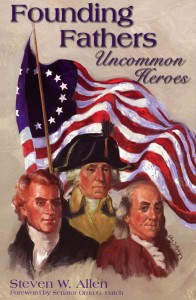
Founding Fathers coverJames Callender was the publisher of the Richmond Examiner and a friend who helped Jefferson get elected to the Presidency. But Callender wanted a job in Jefferson’s administration. Tom, however, knew his background, that he’d been run out of Great Britain for sedition and libel, and had been charged in America under the notorious Alien and Sedition Act, and that he was not a particularly honest person.

Calllender reminded Jefferson of all the hard work and writing he had done to assure Tom of his election. But Tom refused him as a member of his cabinet nevertheless. James reminded Tom of his control of the newspaper and threatened to print stories about Jefferson that would do him damage. read more
Mathematics and Religion and Anger

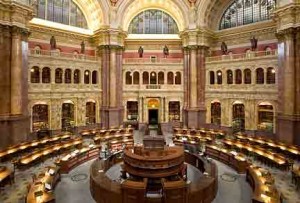
Library of Congress Reading Room“A man in never in worse company than when he flies into a rage and is beside himself!”
“Regret is an appalling waste of energy. You can’t build on it; it’s only good for wallowing in.” –Katherine Mansfield

“Mistakes are the dues one pays for a full life.” –Sophia Loren

Anger and mistakes don’t make you whole again. There’re natural.

“No matter what mistakes you have made—no matter how you’ve messed things up—you can still make a new beginning. The person who fully realizes this suffers less from the shock and pain of failure and sooner gets off to a new beginning.” –Norman Vincent Peale read more

Benjamin Franklin’s Disinterestedness

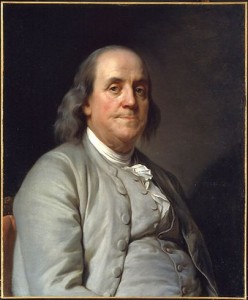
We know that Franklin was in his lifetime a man who accomplished innumerable extraordinary things, includingBen Franklin inventions, diplomatic missions, writings, and printing. We could list a page full. Easily.

He was always learning and helping. One of the character traits he exhibited was that he really didn’t care who got credit. He considered that if God gave him the wisdom to come up with new solutions, inventions or remedies, he wanted to bring those about. He didn’t want the glory. That’s why he never patented any of his inventions. He put them out for public use and benefit. read more

George Washington and His Mother

GeorgeWashingtonIt’s not a tale usually told, but George Washington didn’t get along real well with his mother. He thought she was too controlling, too dominating, and too unpleasant around him. He always respected her and was honor bound to submit to her wishes.

George’s half-brother, Lawrence, was in the British Royal Navy. When he learned that the navy was looking for some more good men, he notified George. George thought that becoming a midshipman would let him engage in a life of adventure and would become glorious career. read more

Lincoln’s Foundry Church

I just finished reading an exciting mystery novel the hero of which was a archivist in the Nation’s Capitol. It was a good book and a very interesting plot, with lots of tidbits of history interspersed.

For example, did you know anything about the Foundry Church in Washington, DC? Neither did I. A foundry is by definition a factory to make cannons and other guns. Henry Foxall built and ran a factory in that city, and that’s what they did. They made guns and cannons for the U. S. Government in the 1800’s. And he was quite good at it. read more

Benjamin Franklin and Words

Mark_Twain_by_AF_BradleyAs you know, Benjamin Franklin was a printer since his early days when he was apprenticed to his brother, James. He eventually moved on from Boston to Philadelphia, where he became a very successful printer with his own company.

Because he was a printer, he was also an avid reader, even though he had a rudimentary education. His access to books helped him become a leader in the City, then the State, then throughout the Colonies, then in England and France, and finally at the Constitutional Convention. read more

George Washington’s Perseverance

GeorgeWashingtonWashington was well known for sticking to a task that he had undertaken. He couldn’t be shaken from doing his duty, or fulfilling his promise.

After he had fought in the French and Indian War, served in the Virginia House of Burgesses, Served as Commander in Chief of the United Colonial Armies until he won the War, served as President of the Constitutional Convention, was unanimously elected, not once but twice as the President of the new United States of America, he finally wanted to return home to Mount Vernon to live out his life. The country wanted him to serve a third term as President, but he finally declined a job! He truly had served enough!! read more

George Washington Didn’t Quit

GeorgeWashingtonOne thing that the British are certain about is that General George Washington never quit. No matter how difficult the challenge, or how bad the weather, or how small the number of recruits, George carried on. He was after all the unanimously appointed Commander in Chief of the United Colonial Army.

He carried on courageously until Yorktown when he became the ultimate winner. What a war. But he still wasn’t finished.

I just read a story about another person who would quit. For some reason it made me think of all Washington had to endure. read more

Franklin as Postmaster—Again!

Ben FranklinBenjamin Franklin returned from a long, long business trip to London in 1775. He was happy to be home. But not quite as happy as those leaders of the Colonies.

John Hancock, of Boston, was President of the Continental Congress when Ben returned to Philadelphia. Ben was welcomed by his wife, by his friends in Philly, and by Congress, the Continental Congress, where he would become a delegate from Pennsylvania.

But before that John Hancock approached Benjamin Franklin with the news. “Dr. Franklin, we’re giving you your old job back as Postmaster of the Colonies.” read more

Benjamin Franklin and Religion

Ben Franklin thumb pictureBenjamin Franklin responded to his sister Jane Mecom of Boston in a letter in 1743. Jane was apparently concerned about Ben’s slightly unorthodox view and convictions.

Ben carefully explained his beliefs and stated gently: “There are some things in your New England doctrines and worship, which I do not agree with, but I do not therefore condemn them, or desire to shake your belief or practice of them.”

At the age of 37, Ben was a little ahead of his time relating to religious toleration soon to be called Freedom of Religion, because under the U.S. Constitution, First Amendment, we are guaranteed that no Government Religion would be established (Amendment I, December 15, 1791). read more