Looking at the news today, one of George Washington’s “Rules for Civility and Decent Behaviour” makes a lot of sense. Maybe we should go back to teaching character this way.
 The rule I’m thinking of was written this way: “Associate yourself with Men of good quality if you Esteem your own Reputation; for ‘tis better to be alone than in bad Company.”
Although my Mom and Dad didn’t know about these rules as I was growing up, they taught me the essence of this rule. Make good friends. Good friends will help you rather than hinder you.
 In the upcoming Presidential election it would seem to be very important to consider what our first President of the United States said about one thing to look for:
 There seems to be a difficulty these days with rendering complete forgiveness to someone who has injured one in some fashion. So as I came across some interesting quotes about forgiveness, I thought I would share them with you. The first one is from Josh Billings, who was introduced to you yesterday.
 Most of us remember a little bit about the Revolutionary War as we learned it in our youth. We can recall the heroic efforts of Colonel Knox at Boston as he was requested to recover lost cannon and other materiel lost at Fort Ticonderoga. We remember the victory at Dorchester. Then the move to New York, where George and his valiant soldiers were chased from Long Island, lost at several posts along the retreat, and moved to New Jersey.
 Albert Einstien was once an avowed atheist. After study and consideration, he seemed to change his tune. Here’s what he said:
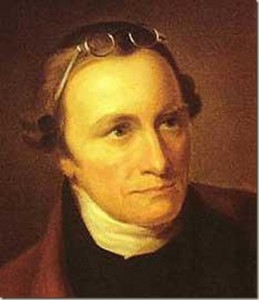 Those Founding Fathers who were against the U.S. Constitution included Thomas Jefferson, and Patrick Henry. Both of them thought that the Constitution did not protect the average citizen enough.
 One of my heroes is Benjamin Franklin. I have found that he is likewise the hero to many Americans. As I have spoken to many different groups over the past 25 or 30 years about our Founding Fathers, I have found that the people’s favorite is hands down Benjamin Franklin.