Washington Kept His Promise

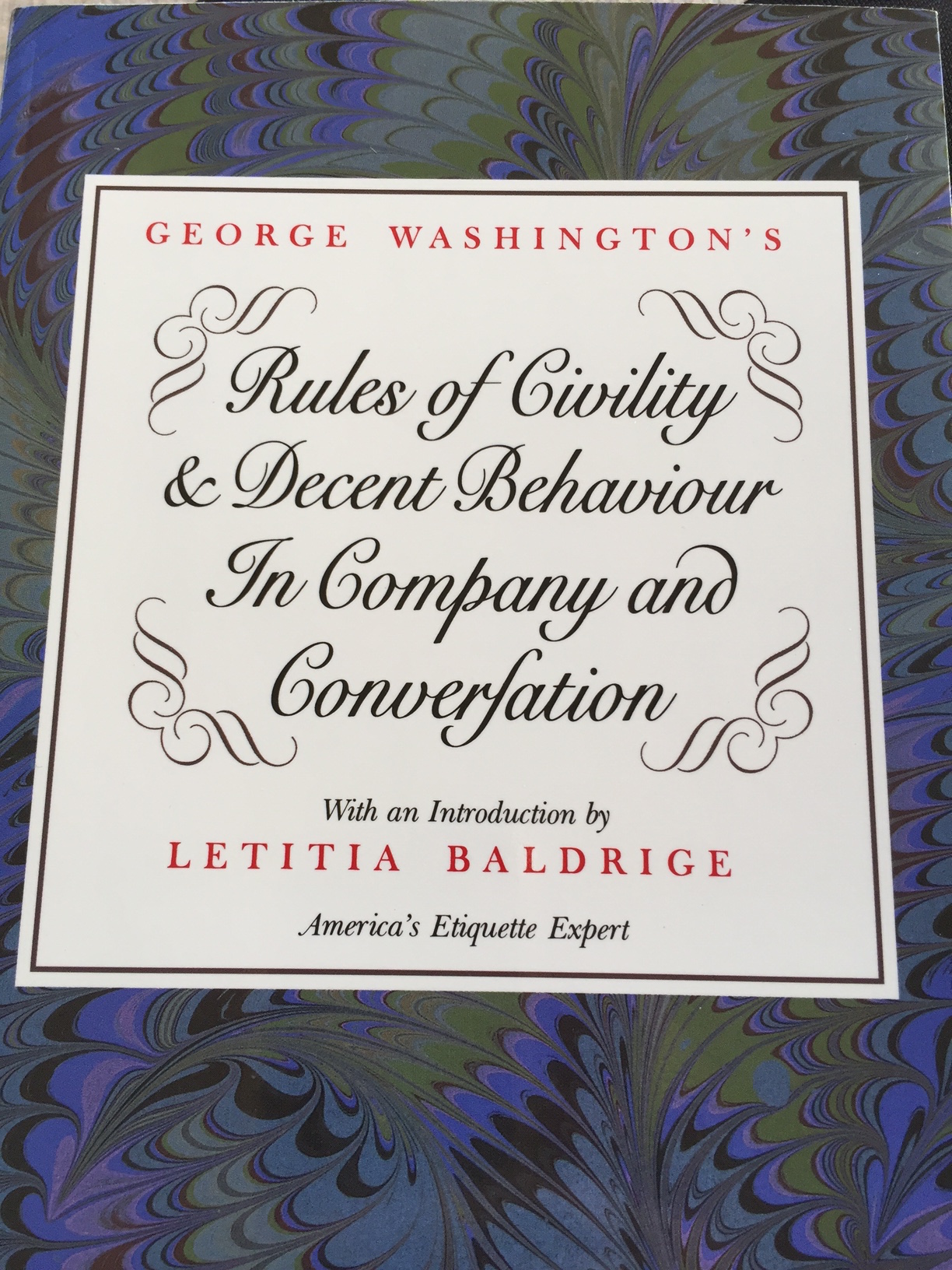
GW Rules“Undertake not what you cannot Perform but be Careful to keep your Promise.”

I’m sure that George Washington must have thought often of this Rule he learned in his youth, when he struggled with his soldiers in the nearly 7 years of the Revolutionary War.

When he was first elected by Congress as the Commander in Chief of the newly united American armies, I don’t think he could have fully understood the troubles and distresses they would have to endure for the next several years.

The victory at Dorchester Heights, was a great beginning. But the battles of New York nearly destroyed the whole army, and except for miraculous happenings even George Washington would have been killed. read more
Natural Law and the Declaration of Independence

445192825_011af775a5_mPeople were beginning to talk about the Colonies becoming independent from Great Britain. Unfair treatment of the colonists without giving them any representation in the British body which deliberated the laws, caused many to rebel, rise up, take to the streets, and, yes revolt.

The colonies sent leaders to represent them in a Continental Congress at Philadelphia. At the 2nd Continental Congress the representatives decided to put independence to a vote. A committee was formed to draft a Declaration of Independence should one be necessary. That committee was Benjamin Franklin, John Adams, Roger Sherman, Robert Livingston, and a young lawyer named Thomas Jefferson, who was chosen to write the first draft of such a document. read more

Was Benjamin Franklin Perfect?

Ben Franklin thumb pictureOK, I realize I have written about Benjamin Franklin quite a few times in the past several weeks. It just occurs to me from time to time that he was fabulously successful in all he did. Benjamin Franklin began a project in his youth because he wanted to become as fine, good, and yes, even as perfect as he could be. He called it his Project for Moral Perfection. He wrote about it in his autobiography, which, of course you have read.

He somehow knew as a youth that his decisions were very important. The choices he would make in life—his education, his marriage, his career, and his service to others would be important. Extremely so. He was then very attentive and even cautious about his resolutions. He resolved to become as perfect as he possibly could. read more

Benjamin Franklin and Humility

Ben Franklin thumb pictureEarly in his life, Benjamin Franklin planned for himself a project for becoming as nearly perfect as a man could become. He originally had 12 characteristics he wanted to improve upon but was soon compelled to add another.

“My list of virtues contained at first but twelve; but a Quaker friend having kindly informed me that I was generally thought proud; that my pride show’d itself frequently in conversation; that I was not content with being in the right when discussing any point but was overbearing, and rather insolent, of which he convinc’d me by mentioning several instances; I determined endeavoring to cure myself of this vice or folly among the rest, and I added humility to my list.” read more

DON’T WORRY—BE HAPPY!

Ben Franklin“We are all here for a spell; get all the laughs you can.” –Will Rogers

“With the fearful strain that is on me night and day, if I did not laugh, I should die.” –Abraham Lincoln

“The human race has only one really effective weapon and that is laughter.” –Mark Twain

“One of the best things people can have up their sleeves is a funny bone!
–Richard L. Weaver, II (who?)

“Oh, I worry over this thing, and I worry over that
But I notice when the atmosphere has cleared,
That the bad luck I had looked for didn’t come and knock me flat.
And I didn’t have the trouble that I feared. read more

Guard Your Liberty

PatrickHenryYou, of course, know of the speech Patrick Henry gave which ended with the words: “Give me liberty or give me death!” And then he pretended to plunge a dagger into his breast.

But have you heard these words which Patrick Henry spoke?

“Guard with jealous attention the public liberty. Suspect everyone who approaches that jewel. Unfortunately nothing will preserve it but downright force. Whenever you give up that force, you are ruined.”

George Washington and Good Company

GW RulesGeorge Washington learned much wisdom in his youth. While learning penmanship, he was instructed to write several (110) maxims from dictation, which maxims taught him not only good penmanship, but also good manners and behavior. Here’s one of those maxims:

“Associate yourself with men of good quality if you esteem your own reputation for ‘tis better to be alone than in bad company.”

He kept that advice his whole life through.

Benjamin Franklin and Gossip

Ben Franklin thumb picture
As you know Benjamin Franklin was a great diplomat. He proved that over and over again. In the Continental Congress with the Declaration of Independence with Thomas Jefferson and John Adams, and others. In his victories with France in obtaining the funds and cooperation of the French in the Revolutionary War. In the Constitutional Convention when the arguments were starting to take over the discussions. And just generally in his life time habits and discourses.

Here’s an example of how he achieved so much: read more

Washington and Wisdom

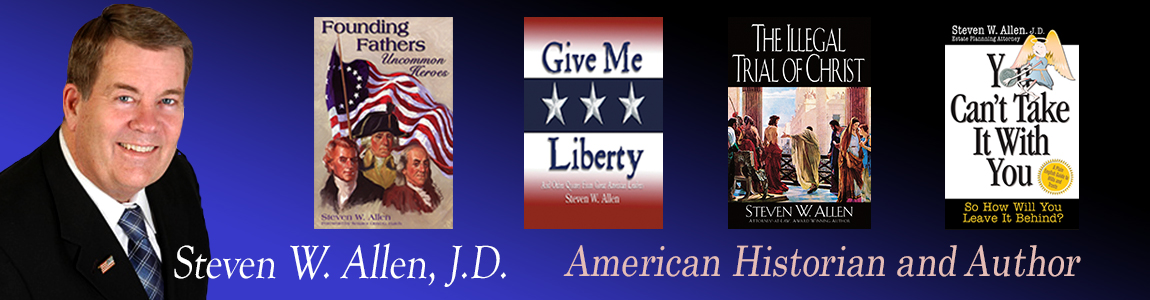
Give Me LIberty coverIt seems that we, as a nation, are just now learning some things that our Founding Fathers knew and tried to tell us. To warn us about.

Here’s just one small example from our first President, George Washington:

“Government is not reason, it is not eloquence, it is force; like a fire, a troublesome servant and a fearful master. Never for a moment should it be left to irresponsible action.”

–George Washington as quoted in “Give Me Liberty,”
by Steven W. Allen, JD.

More About C.S. Lewis

Illgegal Trial of Christ coverI hope you understand that I enjoyed reading “Mere Christianity” by C. S. Lewis. Pick it up for yourself. Not only will you learn something about Christianity, but also about yourself and progress. You will learn things about Christianity, but also about life and decisions you make. Let me give you one example:

“ . . . progress means getting nearer to the place where you want to be. And if you have taken a wrong turning, then to go forward does not get you any nearer. If you are on the wrong road, progress means doing an about-turn and walking back to the right road; and in that case the man who turns back soonest is the most progressive man. read more