 Early in his life, Benjamin Franklin planned for himself a project for becoming as nearly perfect as a man could become. He originally had 12 characteristics he wanted to improve upon but was soon compelled to add another.
“My list of virtues contained at first but twelve; but a Quaker friend having kindly informed me that I was generally thought proud; that my pride show’d itself frequently in conversation; that I was not content with being in the right when discussing any point but was overbearing, and rather insolent, of which he convinc’d me by mentioning several instances; I determined endeavoring to cure myself of this vice or folly among the rest, and I added humility to my list.”
About his success with this virtue, he adds, “I cannot boast of much success in acquiring the reality of this virtue, but I had a good deal with regard to the appearance of it.”
And then he adds this morsel about pride: “In reality, there is, perhaps, no one of our natural passions so hard to subdue as pride. Disguise it, struggle with it, beat it down, stifle it, mortify it as much as one pleases, it is still alive and will every now and then peep out and show itself; you will see it, perhaps often in this history [speaking about his autobiography]; for even if I could conceive that I had completely overcome it, I should probably be proud of my humility.”
It must have been nearly impossible for Franklin to retain any semblance of humility in light of the constant recognition he received for his many accomplishments. Nevertheless, he tried! (See “Benjamin Franklin, Did He Really Do That?” by Steven W. Allen).
-

By: Steven W. Allen, J.D.
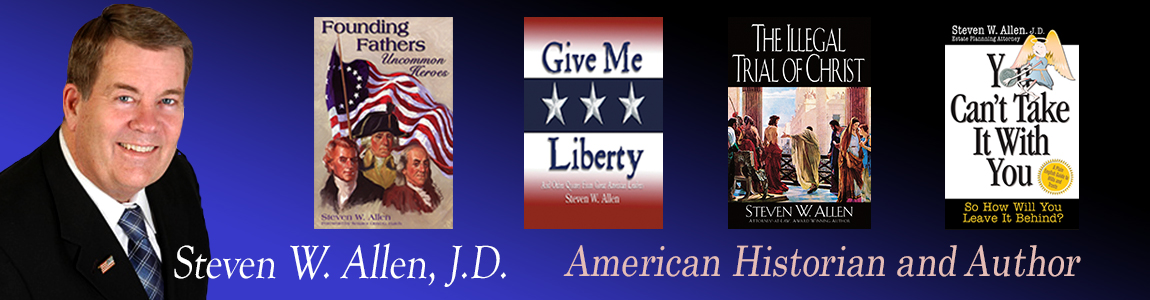
Steven W. Allen, J.D. is an author, speaker, and retired attorney. His book “Founding Fathers – Uncommon Heroes” is popular with all ages and is used in many schools. See his other books at www.StevenAllenBooks.com
-


-
The Federalist Papers
Constitutional Amendments
Founding Fathers and American Heroes
Founding Fathers and War
What About Benedict Arnold?
Books and Founding Fathers