 Thomas Jefferson suggested that editors divide their newspapers into four sections: Truths, possibilities, possibilities and lies.
The General Advertiser in London published a story in 1747 that was soon picked up by some newspapers in the American colonies. It wrote that a woman named Polly Baker from New England, was being prosecuted for giving birth to an illegitimate child. This was the fifth time she had apparently been guilty of the same offense.
Her defense to the judges had been that she had simply been obedient to the “first and great commandment of nature, and of nature’s God, ‘increase and multiply’” She reasoned how could it be a crime to “add to the number of the King’s subjects in a new country that really wants people?”
She had endured repeated prosecutions for this same “public disgrace.” Polly proposed that she should instead be honored with an honorary statue, and not be punished with a whipping and a fine. The judges were fascinated by her words and acquitted her. The next day one of the judges is said to have actually married her!
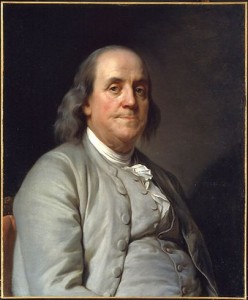 Charming, but not true! Some 30 years later Benjamin Franklin admitted he had concocted the whole story, including her 1,100 word speech, which had been included in the English papers. This was Ben’s effort to show how society sometimes unjustly punished women in the name of morality.
To be fair, Franklin had not published the speech in his own paper, the Pennsylvania Gazette. He had sent the manuscript to London, where it had found its way into that London newspaper. Although any number of writers (including Balzac and Voltaire) repudiated this hoax, “The Speech of Polly Baker” and Benjamin Franklin’s authorship of it, history books published as late as 1917 gave fair treatment to Polly Baker and her story as authentic.
Perhaps it should have been printed under Jefferson’s notation as “possibilities?”
-

By: Steven W. Allen, J.D.
Steven W. Allen, J.D. is an author, speaker, and retired attorney. His book “Founding Fathers – Uncommon Heroes” is popular with all ages and is used in many schools. See his other books at www.StevenAllenBooks.com
-


-
The Federalist Papers
Constitutional Amendments
Founding Fathers and American Heroes
Founding Fathers and War
What About Benedict Arnold?
Books and Founding Fathers