 George Washington recounted that he had experienced at least 57 times during the Revolutionary War when he knew he had been protected by “the hand of Providence.” Perhaps there were some that he didn’t even know about. Like this one:
“The Commander in Chief had a close call himself that day. British Major Patrick Ferguson, nicknamed ‘Bulldog’ was resting with some men in a clump of trees when a party of American officers rode past without seeing them. One of Ferguson’s men happened to have a rifle of the Major’s design, as fine a weapon as any frontiersman’s. A crack shot, he aimed at the easiest target, the back of the biggest man on the biggest horse. He was squeezing the trigger when the major, who thought it ungentlemanly to shoot a fellow officer from hiding, motioned for him to lower the gun. Next day Ferguson learned from an American prisoner that the officer was George Washington. ‘I am not sorry that I did not know at the time who he was’ he said, relieved. ‘Not knowing made it unnecessary to choose between doing something he thought dishonorable and possibly ending the war and killing the enemy commander.’”
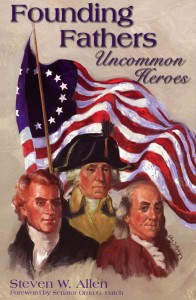
As quoted in “Founding Fathers—Uncommon Heroes,” by Steven W. Allen, page 67.
George Washington recounted that he had experienced at least 57 times during the Revolutionary War when he knew he had been protected by “the hand of Providence.” Perhaps there were some that he didn’t even know about. Like this one:
“The Commander in Chief had a close call himself that day. British Major Patrick Ferguson, nicknamed ‘Bulldog’ was resting with some men in a clump of trees when a party of American officers rode past without seeing them. One of Ferguson’s men happened to have a rifle of the Major’s design, as fine a weapon as any frontiersman’s. A crack shot, he aimed at the easiest target, the back of the biggest man on the biggest horse. He was squeezing the trigger when the major, who thought it ungentlemanly to shoot a fellow officer from hiding, motioned for him to lower the gun. Next day Ferguson learned from an American prisoner that the officer was George Washington. ‘I am not sorry that I did not know at the time who he was’ he said, relieved. ‘Not knowing made it unnecessary to choose between doing something he thought dishonorable and possibly ending the war and killing the enemy commander.’”
As quoted in “Founding Fathers—Uncommon Heroes,” by Steven W. Allen, page 67.
-

By: Steven W. Allen, J.D.
Steven W. Allen, J.D. is an author, speaker, and retired attorney. His book “Founding Fathers – Uncommon Heroes” is popular with all ages and is used in many schools. See his other books at www.StevenAllenBooks.com
-


-
The Federalist Papers
Constitutional Amendments
Founding Fathers and American Heroes
Founding Fathers and War
What About Benedict Arnold?
Books and Founding Fathers