 There seems to be a difficulty these days with rendering complete forgiveness to someone who has injured one in some fashion. So as I came across some interesting quotes about forgiveness, I thought I would share them with you. The first one is from Josh Billings, who was introduced to you yesterday.
“There is no revenge so complete as forgiveness.” -Josh Billings
“‘Tis more noble to forgive than to revenge an injury.” -Benjamin Franklin
“If you are suffering from a bad man’s injustice, forgive him lest there be two bad men.” -Saint Augustine
 An hypothesis is, of course, also defined as a theory, a conjecture, a postulation, or a premise. In other words, it’s not for sure. But it makes for good reading!
 Most of us remember a little bit about the Revolutionary War as we learned it in our youth. We can recall the heroic efforts of Colonel Knox at Boston as he was requested to recover lost cannon and other materiel lost at Fort Ticonderoga. We remember the victory at Dorchester. Then the move to New York, where George and his valiant soldiers were chased from Long Island, lost at several posts along the retreat, and moved to New Jersey.
 After Thomas Jefferson completed his draft of the Declaration of Independence, he submitted it to the committee ordained for that purpose. They made only a few changes or suggestions. Then it was placed before the whole Congress for its adoption.
 John Adams who had spoken fervently in Congress that such a proposition should definitely be approved, was excited. He was so proud of this accomplishment that on July 3, he wrote home to Abigail:
 Several years ago, the King at the time told a friend how he had sent 14 of the brightest young men of Rumania to receive some training for future service in the government. He had sent 7 to England and another 7 to the United States of America, to study the respective political and even economic systems.
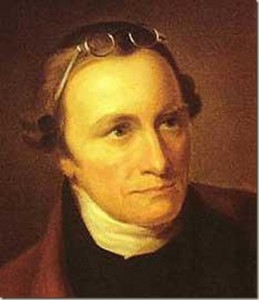 Those Founding Fathers who were against the U.S. Constitution included Thomas Jefferson, and Patrick Henry. Both of them thought that the Constitution did not protect the average citizen enough.
 Of course you remember learning about Benjamin Franklin’s Farmer’s Almanac titled “Poor Richard’s Almanac”. As a printer, Ben knew of the business of Almanacs. Farmers relied on them to prognosticate the weather for their planting and harvesting seasons.