Constitution Day
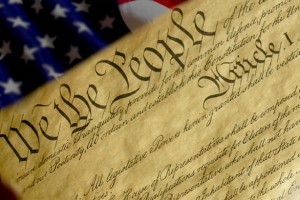
Happy Constitution Day!
 –James Madison
–George Washington
–John Adams
–Alexander Hamilton
–Gouvernour Morris
–Patrick Henry
–Benjamin Franklin
–Thomas Jefferson
and others.
Constitution Day
Happy Constitution Day!
–James Madison
–George Washington
–John Adams
–Alexander Hamilton
–Gouvernour Morris
–Patrick Henry
–Benjamin Franklin
–Thomas Jefferson
and others.
Who was Gouverneur Morris?
Was he a Governor of some State or Colony? What did he do that I should even know who he was?
No, that’s not a misspelling. That’s how he spelled his name—Gouverneur. And he pronounced it “Goo-ver-newer”.
No, he was not a Governor at the time. He was one of the important men attending the Constitutional Convention in Philadelphia, Pennsylvania in 1787. He was one of the important men, at that Convention, such as James Madison, George Washington, Alexander Hamilton and Benjamin Franklin.
 I am a long time football fan and a patriot. I love to watch football games, NFL, Colleges, even some high school. I also love our country. The Pledge of Allegiance is special to me. We said it every morning while standing in our classrooms, hands over our hearts, facing the flag, in elementary school. Then somewhat less in high school.
It was important to sing the national anthem in assemblies, plays, and especially prior to sporting events. Red Skelton made patriotism even more widespread with his recording of him reciting the pledge and explaining what it meant to him.
 Ben Franklin is known not only as a Founding Father and Inventor, but also for his abundant Wit and Wisdom.
We still repeat many of his original sayings today.
For example: “The way to wealth . . . depends chiefly on two words, industry and frugality: that is waste neither time nor money.”
And a more famous one: “Early to bed, early to rise, makes a man healthy, wealthy and wise.”
So, having quoted those two, I’m not going to waste any time, I’m going right to bed!
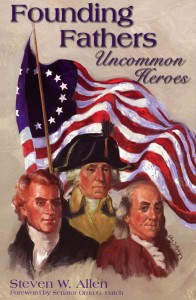 Here are just a few words I think you should be familiar with. Are You?
Founding—those who take the first steps in building.
Fathers—to make oneself the founder, producer, or author of.
Uncommon—not ordinarily encountered, unsusual.
Heroes—exhibiting or marked by courage and daring.
Colonists—member or inhabitant of a colony.
Colony—a body of people living in a new territory but retaining ties with the parent state.
Farmers—a person who cultivates land or crops or raises livestock.
Mechanics—a manual worker or machinist.
Statesman—one versed in the principles or art of government.
Representative—standing or acting for another.
Vote—to cause to be cast for or against a proposal.
Monarchy—individual rule or absolute sovereignty by a single person.
Democracy—government by the people especially rule of the majority.
Republic—a government in which the supreme power resides in a body of citizens entitled to vote and is exercised by elected officers and representatives responsible to them and governing according to law.
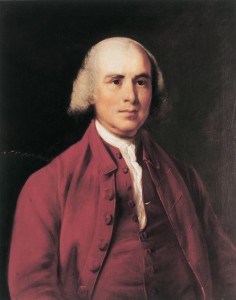 The man known as “The Father of the Constitution”, James Madison, was huge in history, but he was small on the scene. His friends said he “was not much bigger than a half a bar of soap!” He said he was “about 5’6” while others have described him as 5’2” or thereabouts.
But all admit he was a scholar. Madison has been hailed as the prime creator of the U.S. Constitution, but he rejected such praise, saying: “You give me credit to which I have no claim, calling me THE writer of the Constitution of the U. S. This was not like the fabled Goddess of Wisdom, the offspring of a single brain. It ought to be regarded as the work of many heads and hands.”
 After the Constitution was ratified by the U. S. Constitutional Convention, it went to the States for their own State Conventions. Would the States accept it and approve of it? No one knew for sure.
Alexander Hamilton, John Jay and James Madison (the Father of the Constitution) wrote a manual to explain the arguments for and against this document. They wrote it to allay some of the State’s fears. That later became the book “The Federalist Papers”. You’ve read it, of course.
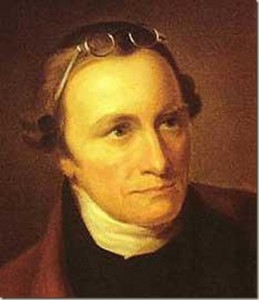
In Virginia Patrick Henry, the most influential patriot, opposed the Constitution, and said so in the convention. The Virginia Convention lasted 23 days. Patrick Henry spoke on 18 of those days, explaining his reasons for objecting to approval. One of those speeches lasted 7 hours!
 Thomas Jefferson, George Washington and Benjamin Franklin had several things in common. Not the least of which was how they faced an argument or a political debate.
Thomas Jefferson explained how he thought about his friends and fellow Founding Fathers this way: “I never heard either of them (George Washington and Benjamin Franklin) speak ten minutes at a time, nor to any but the main point . . .They laid their shoulders to the great points, knowing that the little ones would follow of themselves.”
Our American language has some strange words, or words with different meanings than you would expect. Jefferson was, of course, great with words. George Washington was trained in his youth to write well and use correct words. John Adams did so well with words that he told Abigail that he only accomplished good things with his exemplary use of language—words.
Just for the record, some words don’t seem to make sense any more because their original meaning has been lost. Album is a word that comes to mind. It was used to mean a vinyl record when record players were the vogue. Originally records which spun around the records player at 78 revolutions per minute (RPM), could only contain 4-5 minutes of recorded music.
George Washington, our first President, said this: “Government is not reason, it is not eloquence, it is force; like fire, a troublesome servant and a fearful master. Never for a moment should it be left to irresponsible action.”
Thomas Jefferson wrote: “We hold these truths to be self-evident, that all men are created equal, that they are endowed by their Creator with certain unalienable rights, that among these are life, liberty and the pursuit of happiness.”
That’s where we get out freedoms from. Not from the government, but from God. But it’s a troublesome servant and a fearful master. We have to stay in charge, not give it away.