More About C.S. Lewis

Illgegal Trial of Christ coverI hope you understand that I enjoyed reading “Mere Christianity” by C. S. Lewis. Pick it up for yourself. Not only will you learn something about Christianity, but also about yourself and progress. You will learn things about Christianity, but also about life and decisions you make. Let me give you one example:

“ . . . progress means getting nearer to the place where you want to be. And if you have taken a wrong turning, then to go forward does not get you any nearer. If you are on the wrong road, progress means doing an about-turn and walking back to the right road; and in that case the man who turns back soonest is the most progressive man. read more
C. S. Lewis and Christianity

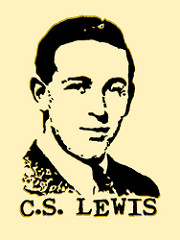
445192825_011af775a5_mMost people know C. S. Lewis as the author of “The Chronicles of Narnia” and that he wrote some other stuff about Christianity. But few know that he was at first an atheist. Through experiences in his life he became a Christian.

He wanted others to be able to find the same things he did, so he held a series of radio broadcasts in 1942 to 1944 about the Christian Faith he had by then endorsed. These speeches were gathered into a book titled “Mere Christianity.” It was addressed to people at war, and contains some amazing insights. read more

Freedom, Founding Fathers, and The Trial of Christ

HeaderIt’s hard to explain, especially in just a few words, but I’ll try. People always ask me why I wrote my books in such seemingly different areas or topics.

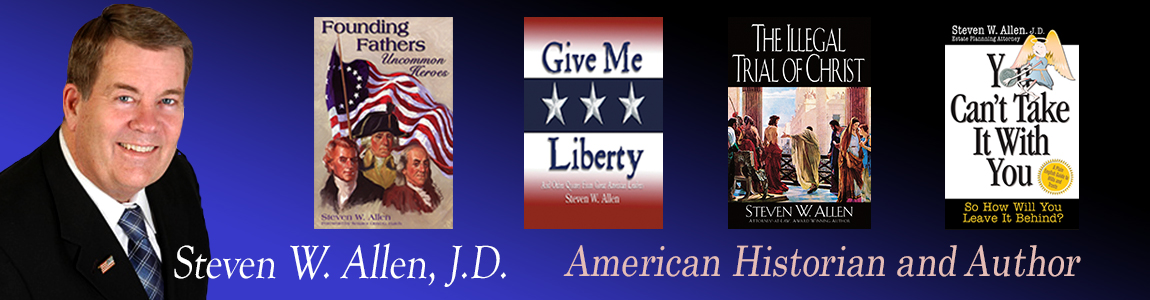
My first book, “Founding Fathers—Uncommon Heroes” is a book with chapters about six of our Founding Fathers. Men who had the courage to establish the United States of America. The six men are Benjamin Franklin, George Washington, John Adams, Thomas Jefferson, Patrick Henry, and James Madison.

My second book, “The Illegal Trial of Christ,” came at the request of my publisher, who knew I gave popular presentations about this topic. This book includes biographical information about the many players involved in the four trials that took place at the end of Christ’s life. In this book I also explain some of the rules, procedures, and laws in effect at that time. Both Roman law and Hebrew law. By understanding these people and their circumstances, readers will come to recognize and grasp why some things are worded the way they are in the four Gospels. read more

Thomas Jefferson’s Private Religious Projects

ThomasJeffersonIn his later years, Thomas Jefferson decided to compile what he understood to be Jesus Christ’s own words from the New Testament. Here is what he actually said about this venture:

“I too have made a wee little book . . . which I call “The Philosophy of Jesus.” It is made by cutting the texts out of the book and arranging them on the pages of a blank book, in a certain order of time and subject. A more beautiful or precious morsel of ethics I have never seen. It is a document in proof that I am a real Christian, that is to say, a disciple of the doctrines of Jesus, very different from the Platonists, who call me an infidel and themselves Christians and preachers of the gospel, while they draw all their characteristic dogmas from what its Author never said or saw. They have compounded from the heathen mysteries a system beyond the comprehension of man, of which . . .were He to return on earth would not recognize one feature.” read more

Christ, Government, and Rome

Illgegal Trial of Christ coverI think I’ve mentioned before that I’ve been reading again a marvelous old work by Walter S. Chandler, an attorney of the New York Bar, called “The Trial of Jesus From a Lawyer’s Standpoint”. The treatise is a two-volume work written, or copyrighted in 1908.

Part of the book deals with the Graeco-Roman Social Life about the time of Christ’s life. It is eye-opening and sobering about the background at that time in history, not just from a Christian lawyer’s standpoint, but from a world history view. read more

Apostles and The Light of Christ

800px-Mtchoirandorchestra_ConferenceCenter_(cropped)I just watched the Semi-annual Conference of The Church of Jesus Christ of Latter-day Saints. The music was provided by the Mormon Tabernacle Choir, and it was majestic and inspirational. The talks that were presented were also inspirational.

The Church Prophet told us all to keep the Commandments of God and to let our light so shine as to glorify God. And much, much more.

Three men were presented and sustained as new members of the Quorum of the Twelve Apostles, patterned after how Christ first built His Church on the earth. These three were to take the place of three who had died since the last conference. read more

Hebrew Law and U. S. Law

Illgegal Trial of Christ coverI’ve been re-reading a 2 volume work by Walter Chandler entitled “The Trial of Christ.” This book explains the Hebrew rules of court in great detail. It likewise explains the Roman laws, which were necessary because Judea was a nation conquered by Rome prior to the trial of Christ.

The amazing thing is it’s a wonder that anyone was ever found guilty of a crime punishable by death because the rules were so stringent about witnesses and judges (members of the Sanhedrin). But then as you read the accounts in the four Gospels of what transpired to bring Christ to the cross, you see vividly how many of the laws and rules of procedure were intentionally violated. read more

Witness Against Yourself

judicial scalesIn Federal criminal cases only about 3% actually go to trial. The remainder are pleaded down by the prosecution in agreement for a guilty plea by the accused.

It is interesting to me that in ancient Hebrew law, the accused could not be convicted based on his own testimony. I was reminded of that as I read this comment in the book “The Trial of Jesus” by Walter Chandler:

“Some weak-minded people, unable to support the torture of a harassing examination, and eager to regain their liberty, make a full confession, accusing themselves in order not to be indicted. . . .from want of responsibility . . . accept or confirm everything of which they know nothing.” (Vol. 1, page 143). read more