
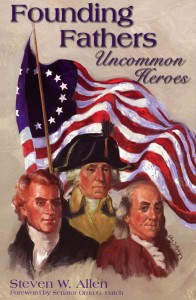
 I’ve read a lot about our Founding Fathers. They were men of great faith, and great action on that faith. I read the following quote and it reminded me of our Founding Fathers, especially George Washington, Thomas Jefferson, Benjamin Franklin, John Adams and James Madison. Yes, and others. Here’s the quote:
“God blesses us according to our faith. Faith is the source of living with divine purpose and eternal perspective. Faith is a practical principle that inspires diligence. It is a vital, living force manifest in our positive attitude and desire to willingly do everything that God and Jesus Christ ask of us. It takes us to our knees to implore the Lord for guidance and to arise and act with confidence to achieve things consistent with His will.” (Ulisses Soares, Ensign magazine, May, 2017, page 34.)
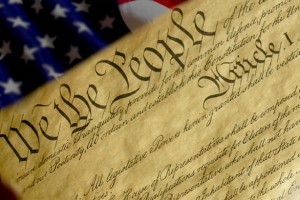 In the Constitution, the Founding Fathers set out a plan for the ruling of the new nation. That plan included procedures should the leaders be guilty of high crimes or misdemeanors. They could be impeached. Yes, even the Supreme Court Justices were (in theory) subject to this.
 To All You Mothers Out There:
 Thomas Jefferson was serving in Congress in August of 1775. At their break he was happy to return to his home at Monticello. His happiness soon turned to grief. A month after he arrived home, his second child, one year old Jane Randolph Jefferson, died. Jane had been born April 3, 1774, only 3 ½ months after the Boston Tea Party had taken place.
 One of the character traits that Benjamin Franklin wanted to pursue to perfection as described in his “Project for Moral Perfection” was Tranquility. He defined it thus: “Be not disturbed at trifles, or at accidents common or unavoidable.”
 Here’s something I didn’t know before. In addition to being the Father of our Country, George Washington also gave America the first “Mammoth Jackass.” Yes, the large donkey. In Washington’s time the donkeys were short in height and lacked the stamina Washington needed them to have for work.
 In the year 1634, in Boston, Massachusetts, Edward Palmer was a hard working carpenter. He was commissioned to build the first wooden stocks, by the town elders. These stocks were intended to be used for public punishment.
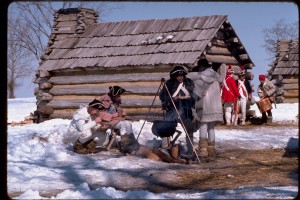 George Washington and his soldiers, such as they were, established camp at Valley Forge, Pennsylvania. It was a week prior to Christmas. They stayed there until June, 1778. During those six months as many as 2,000 men died. It was cold during the winter months, but the men didn’t die due to the weather.
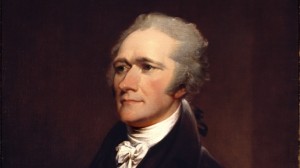 A good example is Alexander Hamilton. He was born in Nevis, the West Indies, to an unmarried mother. Somehow he found his way to America. He was introduced to George Washington who made him a part of his Revolutionary Army. He served so faithfully that Washington eventually named him to be his Secretary. He was valiant in the War and later served as George Washington’s Secretary of the Treasury.