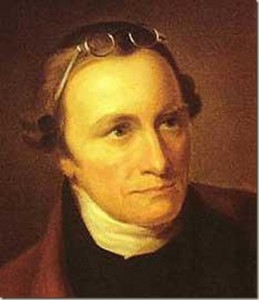
 Patrick Henry didn’t like the U.S. Constitution. He spoke out forcefully against its adoption in the Virginia Constitutional Convention. He spoke nearly every day –18 of the 23 days of the Convention, arguing against its adoption. Why didn’t he like it, you ask? It wasn’t because he was not a true patriot. He was known as America’s first patriot.
He didn’t like it because he thought it didn’t protect the citizens as well as it should. He thought America would descend into a monarchy just like Great Britain unless it provided more written proofs of the citizens’ rights.
 Looking back on it, many would agree that the two Amendments to the U.S. Constitution which were both ratified in 1913, were the worst Amendments ever adopted (some say they weren’t actually properly ratified). Those were the Sixteenth and Seventeenth Amendments.
 t’s hard for me to write anything negative about Thomas Jefferson, I love him so much and admire him for what he has given us. Jefferson taught others not to spend your money before you have it, to save and be frugal. Yet he didn’t seem to listen to his own advice in that regard.
 “Each of us was given a portion of God’s light, called ‘the Light of Christ,’ to help us distinguish between good and evil, right and wrong. This is why even those who live with little or no knowledge of the Father’s plan can still sense, in their hearts, that certain actions are just and moral while others are not.
 John Adams was creative and artistic in his use of words. He once explained to Abigail that he wanted to write a book to express his feelings and knowledge about the new Constitution which was being written while he was a diplomat to Great Britain.
 In his elder years John Adams and Thomas Jefferson rekindled their friendship. They carried on a correspondence that covered every known topic. They were both very learned gentlemen and together they had accomplished more than anyone could have expected. Thomas Jefferson wrote the Declaration of Independence without books or reference materials. John Adams carried the day at the convention by his forceful power of speaking.
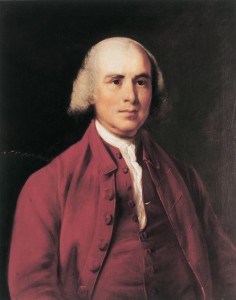
 Dolley Madison, who was married to James Madison, was raised a Quaker. She gave up her religion when her father was banished from the Quaker religion when he filed for bankruptcy as his starch making business failed. Dolley couldn’t get over that.
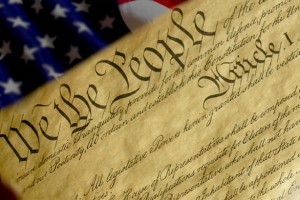 We learned in our Contracts class, that to understand a contract you had to look into the “four corners” of the document to understand the basic premise. That apparently isn’t the case with the most important document in the establishment of the nation, the Constitution.