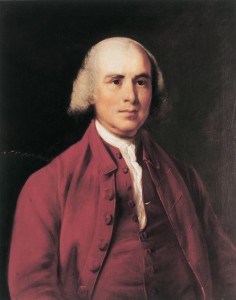
James Madison and Thomas Jefferson

monticelloOf course you know that James Madison and Thomas Jefferson were both Virginians, and they were great friends. Madison asked Jefferson to send him some books as he was studying how to plan for a new government. Jefferson sent him two trunks of “literary cargo” from France where Jefferson was the Minister.

Jefferson helped and gave Madison several ideas on some re-modeling of Madison’s home at Montpelier, including some architectural tricks for his parlor. Jefferson designed and modeled a room at Monticello for James and Dolley to stay in when they visited, which they often did. Dolley served at hostess for Jefferson at many State Functions because Jefferson was a widower in the White House. read more
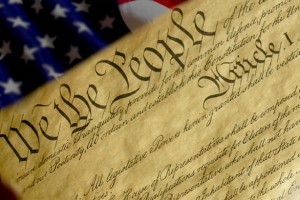
Theology and Democracy or Republicanism

Thomas Jefferson’s words in the Declaration of Independence should be given great attention in the United States today. As a lawyer, I consider the Declaration of Independence to be analogous to a new companies “Articles of Incorporation” or “Articles of Association” for an LLC.

Those are the documents that create a new company to be guided by the purposes described in such a document. The U.S. Constitution is analogous to the By-laws or Operating Agreement of the new company. They describe how is will be managed. read more

Christianity and the Supreme Court

Just think of how much things have changed since the beginning cases in the Supreme Court. I believe our Founding Fathers would be chagrined and amazed at the convolutions that the modern Justices go to in order to declare their new “findings” in the Constitution.

JamesMadisonOne of the Supreme Court Justices nominated by James Madison was Joseph Story. Now remember, Madison was the most learned man when it came to the U.S. Constitution. He sheparded it through to approval, including writing many of the “Federalist Papers”. read more

Constitution Day and James Madison

Dolley_MadisonTonight I spoke to a group of adults about James and Dolley Madison and the Constitution. The presentation was well received. I enjoyed it.
I started out the evening by reading a quote from “Parade” magazine this week. There was an article entitled “If I Were President . . .” Several famous people, TV stars, Movie Stars, athletes, and other celebrities were asked the question. Some answers were stunning, some were good ideas, some were just plain wacko!

I quoted the one by Kareem Abdul-Jabbar, NBA superstar and author. I was astonished and pleasantly surprised by his remarks. Here’s what he said: read more

Did You Know This About the Constitution?

Who was Gouverneur Morris?

Was he a Governor of some State or Colony? What did he do that I should even know who he was?

No, that’s not a misspelling. That’s how he spelled his name—Gouverneur. And he pronounced it “Goo-ver-newer”.

constitutionNo, he was not a Governor at the time. He was one of the important men attending the Constitutional Convention in Philadelphia, Pennsylvania in 1787. He was one of the important men, at that Convention, such as James Madison, George Washington, Alexander Hamilton and Benjamin Franklin. read more
Americans Must Vote

constitutionThe Declaration of Independence together with the United States Constitution created a government never before seen by man on this earth. It is a government of the people and by the people. The people have a mandate to chose their own leaders. To vote!

This election is about who will sit on the Supreme Court, as much as it is about who will be President of the United States. After all, Supreme Court Justices are appointed for life—no elections, no impeachments. A President presides for 4 years, or perhaps 8. Justices may serve for 10, 20 or 30 years. For life, or until they choose to retire, as did Justice Sandra Day O’Connor. read more

Founding Fathers

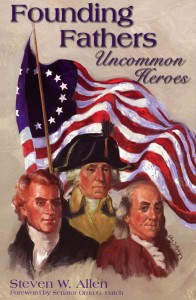
Founding Fathers coverHere are just a few words I think you should be familiar with. Are You?
Founding—those who take the first steps in building.
Fathers—to make oneself the founder, producer, or author of.
Uncommon—not ordinarily encountered, unsusual.
Heroes—exhibiting or marked by courage and daring.
Colonists—member or inhabitant of a colony.
Colony—a body of people living in a new territory but retaining ties with the parent state.
Farmers—a person who cultivates land or crops or raises livestock.
Mechanics—a manual worker or machinist.
Statesman—one versed in the principles or art of government.
Representative—standing or acting for another.
Vote—to cause to be cast for or against a proposal.
Monarchy—individual rule or absolute sovereignty by a single person.
Democracy—government by the people especially rule of the majority.
Republic—a government in which the supreme power resides in a body of citizens entitled to vote and is exercised by elected officers and representatives responsible to them and governing according to law. read more

Old Constitution or New Constitution

constitutionMany new students of our form of government seem to think they have a better idea. We should try more direct democracy, or perhaps a modern socialism, or even communism would work better.

I’ve got a consideration for everyone who wonders about this. Our Founding Fathers were so concerned about their new government they made world governments a serious study. They studied Greece, Rome, and even Israel. They knew about Monarchies and dictatorships. James Madison in particular made it a serious study. How do governments operate and how do they eventually work. read more

James Madison, The Littlest Big Man of the Constitution

JamesMadisonThe man known as “The Father of the Constitution”, James Madison, was huge in history, but he was small on the scene. His friends said he “was not much bigger than a half a bar of soap!” He said he was “about 5’6” while others have described him as 5’2” or thereabouts.

But all admit he was a scholar. Madison has been hailed as the prime creator of the U.S. Constitution, but he rejected such praise, saying: “You give me credit to which I have no claim, calling me THE writer of the Constitution of the U. S. This was not like the fabled Goddess of Wisdom, the offspring of a single brain. It ought to be regarded as the work of many heads and hands.” read more

Patrick Henry and the Virginia Constitutional Convention

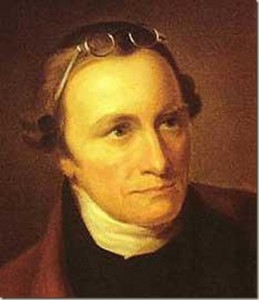
PatrickHenryAfter the Constitution was ratified by the U. S. Constitutional Convention, it went to the States for their own State Conventions. Would the States accept it and approve of it? No one knew for sure.

Alexander Hamilton, John Jay and James Madison (the Father of the Constitution) wrote a manual to explain the arguments for and against this document. They wrote it to allay some of the State’s fears. That later became the book “The Federalist Papers”. You’ve read it, of course.

In Virginia Patrick Henry, the most influential patriot, opposed the Constitution, and said so in the convention. The Virginia Convention lasted 23 days. Patrick Henry spoke on 18 of those days, explaining his reasons for objecting to approval. One of those speeches lasted 7 hours! read more