
History is full of stories of people who were talented and even gifted. Even then they were overlooked by many of their peers until someone believed in them.
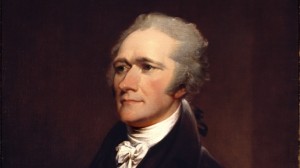 A good example is Alexander Hamilton. He was born in Nevis, the West Indies, to an unmarried mother. Somehow he found his way to America. He was introduced to George Washington who made him a part of his Revolutionary Army. He served so faithfully that Washington eventually named him to be his Secretary. He was valiant in the War and later served as George Washington’s Secretary of the Treasury.
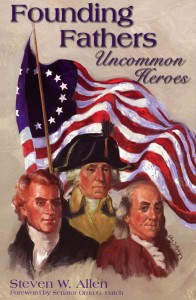 Benjamin Franklin, who took part in most of the life changing events of his time, lived to be 84. He died in 1790.
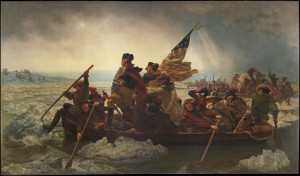 In the Revolutionary War the battles generally stopped in the winter months. That was mostly because of the cold and wet weather. George Washington didn’t consider that in his quest to cross the Delaware River and attack the British forces with the Hessian soldiers who were camped at Trenton, New Jersey. The main British army had stopped for rest, dining and dancing somewhat earlier.
 This week’s commemoration of Good Friday and then Easter Sunday is an important milestone in the Christian Religion. It was honored by our Founding Fathers. Thomas Jefferson said that the “Wee Little Book” he created is “proof positive that I am a real Christian . . . .”
 It doesn’t get much notice these days, but John Adams actually had quite a bit to do with our country becoming independent. One very interesting letter was written by Adams in support of William Hooper’s (William Hooper, who’s he?) preparation of a new written constitution for the State of North Carolina. This letter was later published by a Philadelphia printer. Here’s one sample paragraph:
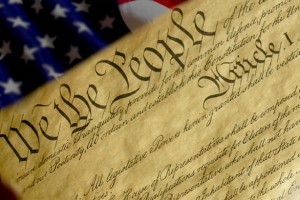 After the Revolution America started off strong. With a new Constitution and President George Washington, this fledgling government was to become a world leader. Can it continue? Or as Benjamin Franklin advised: “We have a Republic—if you can keep it.”
 One of the virtues our Founding Fathers are known for, is Kindness. Thomas Jefferson was known to receive visitors to the President’s Mansion without prior announcement or request. He was always polite and gracious to his visitors.
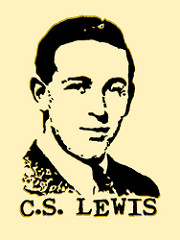 C. S. Lewis, a Christian Writer (The Chronicles of Narnia) of his day (1898-1963) had an interesting way of explaining things. Another writer said of him: “The mere Christianity of C. S. Lewis is not a philosophy or even a theology that may be considered, argued, and put away on a shelf (kind of like our debate about being a Christian nation).