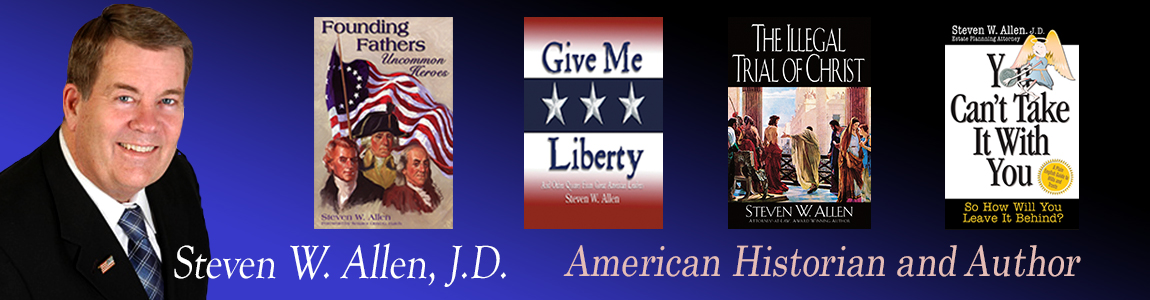
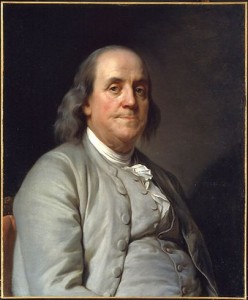
 Benjamin Franklin wrote the book “The Art of Virtue” to help others understand that being true to oneself is being virtuous. Of course he also wrote this Autobiography, “Poor Richard’s Almanac”, and his book about Electricity. Several times he describes his “project for moral perfection, which he worked on all his life to improve his own character.
He gave us much sage advice, some of which we still quote today (early to bed . . .). He showed us how important it is to have character, or moral excellence and firmness. Not only by his writings, but by the life he lived.
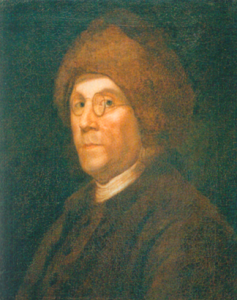 Besides being a successful printer, Benjamin Franklin was an inventor. He would often ask himself questions, such as how can I read my work and stay busy with other things. He needed to see things up close and at a distance.
 In 1863 there lived a young, penniless widow in New Hampshire named Sarah Hale. She established a popular magazine called “Godey’s Lady Book.” In her “book” she wrote some columns, some articles, some editorials, and even some recipes. (Reminds you a little of Benjamin Franklin and his “Poor Richard’s Almanac” doesn’t it?)
 The past few days so many editorialists and commentators have touted that we have a great democracy. I must remind you once again, we, in America, do NOT have a democracy. Remember how after the Constitution was finally approved by the Constitutional Convention in 1787, Benjamin Franklin was asked “what was the result of the deliberations. What kind of government do we have?”
 Benjamin Franklin did not, no he didn’t, write the first American novel. However, as a printer, he did publish the first novel in America. The first novel written in plain English was “Pamela” by Samuel Richardson. That was published in London in 1742. Benjamin Franklin brought it to America and published it himself in his printing shop in 1744.
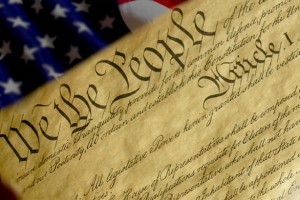 There is still some opposition to the Electoral College. Some people are advocating that it be done away with and we go to a strictly popular vote. That would move us more towards Democracy. If you’ve read any of the words of the Founding Fathers, you’ll remember that they taught that a Democracy is one of the worst types of government. It eventually results in the control by the masses and tyranny.
 Poor Richard’s Almanac was written and printed by Benjamin Franklin, Printer, and it was very popular. We still use some of his hokey sayings today. For example: “Three may keep a secret if two of them are dead>”