Thomas Jefferson’s Thoughts and The Declaration of Independence

Jefferson said: “The glow of one warm thought is to me worth more than money.”

monticelloI guess that’s literally true. Tom had many great and warm thoughts, but he spent his money liberally. (Is that why the liberals like to spend money so fast—yours and mine?)

When he died, his family had to sell whatever they could of his to pay his debts. But Monticello has been restored to its glorious condition today. If you haven’t visited there yet, make it a point to do so. You can learn so much from just a visit to his home, see how he lived, and what he loved to design and to collect. And how dear he held his family in his thoughts. read more
Music and the Founding Fathers

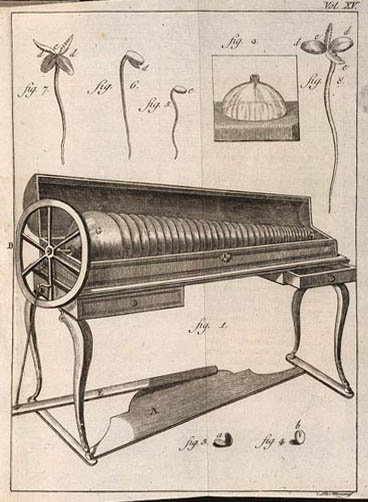
Benjamin_Franklin's_glass_harmonica_(LoC)_edited

Benjamin Franklin’s Glass Armonica

Did you know that Thomas Jefferson was also a musical devotee. That’s why he and Martha Wayles Skelton were so enamored with each other at first. Martha would play the harpsichord and Tom his violin. They loved to sing and dance. Tom ordered a beautiful harpsichord from his agent in Europe, and had it shipped to Virginia as a wedding gift for Martha. So among all the other talents Tom is credited with, music must be counted.

George Washington also loved to dance and loved music. That’s why he and Martha Custis originally hit it off so well together. George loved to have young people come to dances at his home at Mount Vernon. When George walked into the dance parlor, music and dancing would stop, and the youth would stare at George. So George, instead of entering the dance hall, would sometimes stand at the door and look through a crack between the doors to enjoy the dance. read more

And To Think It All Started With 10 Commandments

On the wall in my law office, next to my grand bookcase full of law books, I had a framed cartoon.  It wasn’t a very large cartoon, but it made a point. The cartoon drawing showed a man, presumably a lawyer, standing in front of an enormous bookcase, full of law books. The man’s image of a thought balloon held these words:  “And to think it all started with just 10 Commandments!”

On July 4, 1776, 56 representatives from the original 13 colonies in America chose to begin a new nation. They declared our independence from Great Britain with an inspired document. That was the beginning of the United States of America. read more

“I Cannot Live Without Books!”

It is interesting and even fascinating to me how much respect and reverence our Founding Fathers had for books. Of course books were then very expensive and dear. And there was no modern technology to compete: no computers, iPads, internet, telephones, cars, refrigerators, radio or television. Still, they knew how important books were to their education, knowledge, getting ahead, and even sometime their very existence.

With apologies to Nancy Sinatra, the Founders of this nation knew “these books were made for reading, and that’s just what you’ll do. One of these days these books will make a scholar out of you!” read more

Independence Day – How It Happened – Part 4

Thomas Jefferson explained that the object of the Declaration of Independence was:

“Not to find out new principles of new arguments never before thought of, not merely to say things which had never been said before; but to place before mankind the common sense of the subject, in terms so plain and firm as to command their assent, and to justify ourselves in the independent stand we [are] compelled to take.”

The Declaration was intended to be an expression of the American mind. Jefferson wrote of his completed project:  “Whether I had gathered my ideas from reading or reflection I do not know. I know only that I turned to neither book nor pamphlet while writing it.” read more

Indepence Day – How It Happened – Part 3

The draft of Jefferson’s declaration was submitted to the committee. Benjamin Franklin made a few suggestions and improvements agreed to by Jefferson. They were incorporated into the draft which was submitted to Congress on Friday, June 28, 1776.

It too, was tabled until a vote could be taken on Richard Henry Lee’s resolution to break with Great Britain. That resolution was adopted by Congress on July 2. John Adams thought that day would become the day of celebration. The next day he wrote to his wife, Abigail: read more

Independence Day – How It Happened – Part 2

The committee for the preparation of a draft of a declaration of independence was made up of Benjamin Franklin, Thomas Jefferson, John Adams, Roger Sherman and Robert Livingston. They met together to decide which of them would write the intial document for consideration. It was proposed that Benjamin Franklin, the oldest, wisest, most experienced of the team should be the scrivener. He declined, arguing that it wouldn’t be proper or smart for him to write the original document, as his son, William, had remained a loyalist, and was then the Governor of New Jersey. read more

Independence Day – How It Happened – Part 1

One of our great National Holidays is coming up soon–Independence Day! This year it falls on the 4th of July. Oh yeah, every year it falls on the 4th of July–that’s the day we celebrate.

Most of us remember that we celebrate this Holiday to commemorate the signing of the Declaration of Independence. That magnificent inspired document by which our Founding Fathers declared that the 13 colonies of Great Britain are now free and independent states.

A new country was created!

However, it seems to me, that many of us Americans have forgotten some interesting and significant details that transpired in connection with this historic event. Some that we learned in 8th grade, and some that our teachers never got around to explaining to us. So I’m going to remind you of just a few. read more

Benjamin Franklin for Christmas

Christmas tree

It’s December. I got to thinking, there isn’t a whole lot written
about how our Founding Fathers actually spent their Christmas
Holidays. My imagination started working overtime wondering how
they would react to our own Christmas Celebrations.

What if some of our Founding Fathers skipped right from their own
family Christmas gathering and appeared at one of my own?  Let’s
just surmise and pretend, with our thinking cap in a prominent
position on our heads. Take Benjamin Franklin for example. read more

Ben Franklin — Mind Your P’s and Q’s

Benjamin FranklinA few years ago my wife, my son and I traveled in New York State. One small town we stopped at was Palmyra, near the “Finger Lakes.” In that town there is now a restored place of business known as “The Grandin Press and Print Shop.” The owner of that shop had the most advanced printing press of the times in 1830. It was not much different from the printing press on which Benjamin Franklin printed his “Poor Richard’s Almanac” in the 1750’s. The printing press may have been somewhat improved, but the actions required by the printer was nearly the same. read more