
 OK. After the shenanigans in Iowa, and the politician sounding more like politicians than like real Americans, I am more convinced than ever that we need a businessman at the head of the country, rather than more politicians.
Look at the mess the politicians have gotten us into. They all sound like more of the same. Promises, promises, but when they get into office, it’s just more of the same. Government as usual. Every time!
On the one side we have an avowed socialist who promises everything for free, and he will take the necessary money from the wealthy to give these freebies. Or we have someone who cannot tell the truth, and who promises more of what we have had under Obama, without any respite! She has shown by her actions that she can’t be trusted—especially with government. Guaranteed ruination!
 The current grumbling about the votes or caucuses in Iowa is evidence that the more things change, the more they stay the same. Perhaps some shenanigans were pulled. But then, most of them are politicians—so what do you expect?
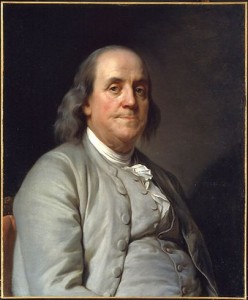 The Founding Fathers must have believed a democracy was the way to go, if what they gave us with the United States of America is really a democracy. No on both counts.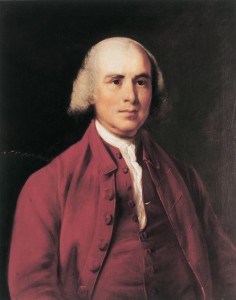
 As a member of the National Speakers Association, I was pleased to make a personal acquaintance with Charlie “Tremendous” Jones at one of our meetings. He was a large speaking presence. During his presentation he actually picked on me!
 My wife has been asking me what I want to do now that I’m retired. The other night I woke up at about 2 or 2:30 with a thought on my mind. It seemed important to me at that time in my groggy condition. So what did I do? I got out of bed, went into my office, found a scrap of paper and a pencil and wrote down my thought.
 On Watter’s World on Fox news, one college man was asked to name the first President of the United States. The man answered: “Wasn’t that Abraham Lincoln?”
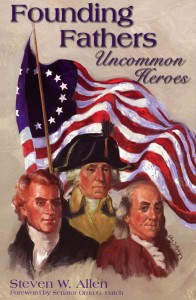 One thing about Benjamin Franklin is that he finished much better than he had started out. If you’ve read his Autobiography, which I hope by now you have, you know that Ben left his family, his brother’s printing business, and his city of Boston, at the early age of 17. And that with only a few pennies to his name.
 Wow. Who has ever used that word in normal conversation?