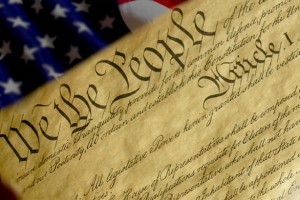
 Senator Orrin Hatch has been in the Senate a long time. Some think too long. He has a good record. One thing I particularly like about Senator Hatch is that he asked Sandra Day O’Connor, the first woman nominated to the Supreme Court to learn more about the U.S. Constitution.
He wanted her to listen to a series of lectures given by Constitutional Scholar and founder of The Freeman Institute, later renamed the National Center for Constitutional Studies, Cleon Skousen, now deceased. She didn’t want to. She was a lawyer, a former Arizona State legislator, and Superior Court Judge. She thought she knew the Constitution.
 Wilford Woodruff, a religious leader in the 1800’s, reflected in his writings about the nature of the leaders of the nation in 1776 as compared to the individual characters of those of only 100 years later. It seemed to him that there was a growing gulf between the character, integrity, and inspiration of the leaders of his time, and that of the leaders in the Revolution and the promulgating of the U.S. Constitution.
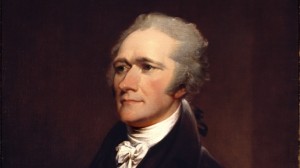 Boy, that was an eye-opening account of “Legends and Lies” by Bill O’Reilly tonight. It was on TV. Pictured was the death of President George Washington, the election between John Adams and Thomas Jefferson, which was decided in the House, and the duel between Alexander Hamilton and Aaron Burr.
 After the Constitution was ratified by the U. S. Constitutional Convention, it went to the States for their own State Conventions. Would the States accept it and approve of it? No one knew for sure.
 When James Madison was 43 and a Congressman, he met Dolley (Dorothy Payne), she was a 26 widow with two young sons, one a new born and one 18 months old. She was beautiful and vivacious and very popular. He was old and dreary of temperament. It didn’t seem like much of a match made in heaven.
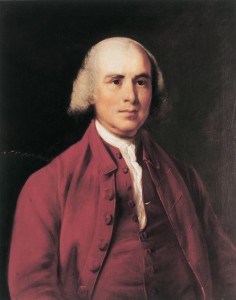 The Constitution was undeniably the idea, design, and proposal of James Madison, but so also was the Bill of Rights. The first 10 Amendments to the Constitution. Once the Constitution was ratified and signed by the 55 Representatives of the States in Congress, it had to be approved by each of the States individually.
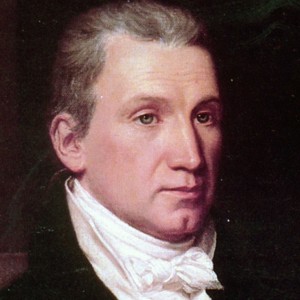 I would like to remind you of the acts of two of the other great American heroes of the Revolution who took part in that battle. The Battle of Trenton.