
 As I told you yesterday, I have learned some interesting facts from reading a fiction Bestseller. But I didn’t mention the name of the book or the author. So if you are interested, the name of the book is “the Fifth Assassin” by Brad Meltzer. The main character is Beecher White who is an archivists and the National Archives in Washington, D.C.
An archivist is, of course, someone who is in charge of Archives. An archive is a place where public records or historical documents are kept. The National Archives in Washington is a beautiful building in the District in which the original Declaration of Independence, the U. S. Constitution, the Bill of Rights, and many other very important historical documents are kept.
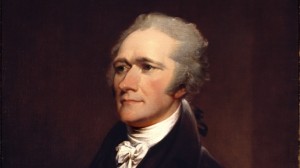 Alexander Hamilton said it this way: “The law . . . dictated by God Himself is, of course, superior in obligation to any other. It is binding over all the globe, in all countries, and at all times. No human laws are of any validity if contrary to this.”
 “I am determined to be cheerful and happy in whatever situation I may find myself. For I have learned that the greater part of our misery or unhappiness is determined not by our circumstance but by our disposition.” –Martha Washington, First American First Lady, 1732-1802.
 Several years ago while I was a successful practicing attorney, I was looking through the morning newspaper. Yes, we still had one on home delivery in those days.
 As you know, Benjamin Franklin was a printer since his early days when he was apprenticed to his brother, James. He eventually moved on from Boston to Philadelphia, where he became a very successful printer with his own company.
 Washington was well known for sticking to a task that he had undertaken. He couldn’t be shaken from doing his duty, or fulfilling his promise.
 “Tact is the ability to see others as they see themselves.”
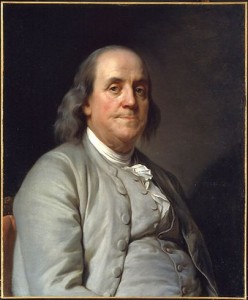 Benjamin Franklin returned from a long, long business trip to London in 1775. He was happy to be home. But not quite as happy as those leaders of the Colonies.