Who was Gouverneur Morris?
Was he a Governor of some State or Colony? What did he do that I should even know who he was?
No, that’s not a misspelling. That’s how he spelled his name—Gouverneur. And he pronounced it “Goo-ver-newer”.
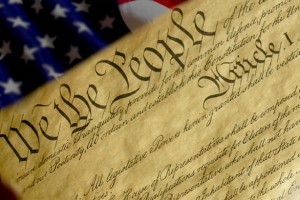 No, he was not a Governor at the time. He was one of the important men attending the Constitutional Convention in Philadelphia, Pennsylvania in 1787. He was one of the important men, at that Convention, such as James Madison, George Washington, Alexander Hamilton and Benjamin Franklin.
 I am a long time football fan and a patriot. I love to watch football games, NFL, Colleges, even some high school. I also love our country. The Pledge of Allegiance is special to me. We said it every morning while standing in our classrooms, hands over our hearts, facing the flag, in elementary school. Then somewhat less in high school.
 We (my wife and I) were recently on a trip to Utah to see some old friends. We saw them and had great memories and tales to tell. On the way back I suggested we should go the other route home which would take us trough Monticello, Utah. They, the Utahns, pronounce the name of their city “mont a sell oh,” unlike Thomas Jefferson, who said he liked to pronounce the name of his home the Italian way: Mont a chell o.
 Ben Franklin is known not only as a Founding Father and Inventor, but also for his abundant Wit and Wisdom.
 Here are just a few words I think you should be familiar with. Are You?
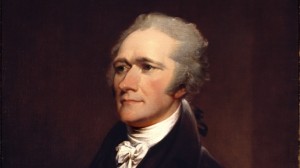 Boy, that was an eye-opening account of “Legends and Lies” by Bill O’Reilly tonight. It was on TV. Pictured was the death of President George Washington, the election between John Adams and Thomas Jefferson, which was decided in the House, and the duel between Alexander Hamilton and Aaron Burr.
 Did you know that Dolley Madison was a widow with two children before she married James Madison? That’s right, Dolley had met and married John Todd, a lawyer, who was like Dolley, also a Quaker. After their marriage they had two children together.
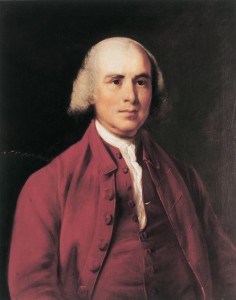 The man known as “The Father of the Constitution”, James Madison, was huge in history, but he was small on the scene. His friends said he “was not much bigger than a half a bar of soap!” He said he was “about 5’6” while others have described him as 5’2” or thereabouts.