When he was about 7 years old, Benjamin Franklin had an experience that taught him something new. It was so significant to him as a child, it stayed with him all his life. It even took on added meaning the more experience he had with life and mankind.
Ben was the fifteenth child and the tenth son born to Joshah Franklin’s family. So he had some older siblings. When Ben was about 7, some visitors to their home gave Ben 10 pennies. An immense sum for a boy of his age and standing.
A few hours later, Ben happened upon a neighbor boy who was blowing on a whistle. Charmed with the sound, Ben asked to buy it from this neighbor. Ben gave all his 10 pennies for the whistle.
When his older brothers and sisters heard him blowing on his whistle, they asked him where he got it. He told them about his purchase. They laughed at him and told him that he could buy the same whistle for two pennies.
Instantly the whistle lost all its charm. When Ben thought of what he could have bought with the rest of the pennies, and when he heard his family laugh, he cried with vexation.
He never forgot the experience. As he grew older, whenever he was tempted to buy something, he would stop and remind himself not to “give too much for the whistle.”
Gradually, the memory generalized to an even broader principle. When Ben saw a man too fond of political popularity, neglecting his own principles, and ruining himself, he would say: “He pays too much for his whistle.”
When he met a man of pleasure who ignored all opportunities to improve his mind or his fortune, abandoning himself to sensuality, he would say, “You pay too much for your whistle.”
“In short, I conceived that the great part of the miseries of mankind,” Franklin said, “were brought upon them by the false estimates they had made of the value of things, and by their giving too much for the whistle.”
So, in satisfying our own appetites, ambitions, and desires, in all things, from food to furniture, from pleasures to politics, and in the use of our time, we would be well served if we would stop and ask ourselves the one question: “Do I pay too much for the whistle.”
-

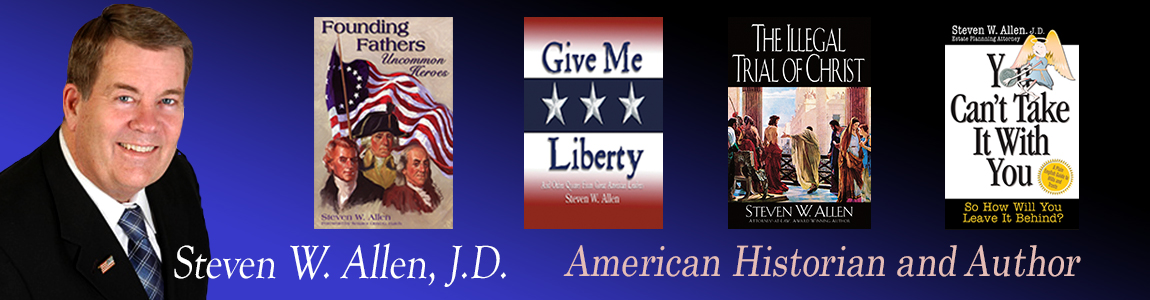
By: Steven W. Allen, J.D.
Steven W. Allen, J.D. is an author, speaker, and retired attorney. His book “Founding Fathers – Uncommon Heroes” is popular with all ages and is used in many schools. See his other books at www.StevenAllenBooks.com
-


-
The Federalist Papers
Constitutional Amendments
Founding Fathers and American Heroes
Founding Fathers and War
What About Benedict Arnold?
Books and Founding Fathers