Carefulness, caution, and good sense. That’s what they meant by prudence. That’s kind of like what Benjamin Franklin defined as “Moderation” in his Project for Moral Perfection. He defined moderation as “Avoid extremes; forbear resenting injuries so much as you think they deserve.” Moderation should be used in all your decisions and actions. Use reason and common sense to solve most problems.
Most of the Founding Fathers seemed to think along these same lines. Use common sense, which is not so common any longer.
 C. S. Lewis talked about it this way: “Nowadays most people hardly think of Prudence as one of the ‘virtues’. In fact, because Christ said we could only get into His world by being like little children, many Christians have the idea that, provided you are ‘good’, it does not matter being a fool. But that is a misunderstanding. In the first place, most children show plenty of ‘prudence’ about doing the things they are really interested in, and think them out quite sensibly. In the second place, as St. Paul points out, Christ never meant that we were to remain children in intelligence: on the contrary. . . .He wants a child’s heart but a grown-up’s head.” (Mere Christianity, page 77).
So use your heart and your head. Be prudent. Think things out quite sensibly.
-

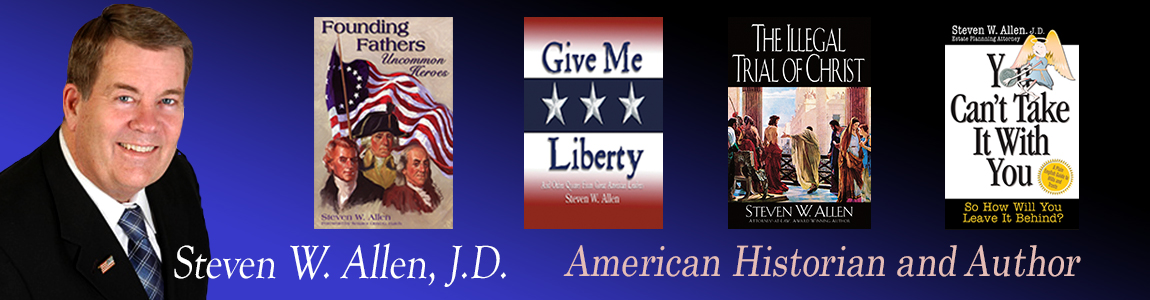
By: Steven W. Allen, J.D.
Steven W. Allen, J.D. is an author, speaker, and retired attorney. His book “Founding Fathers – Uncommon Heroes” is popular with all ages and is used in many schools. See his other books at www.StevenAllenBooks.com
-


-
The Federalist Papers
Constitutional Amendments
Founding Fathers and American Heroes
Founding Fathers and War
What About Benedict Arnold?
Books and Founding Fathers