
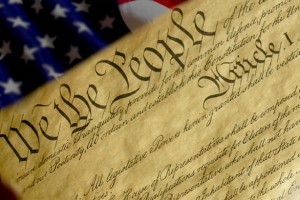
 If you would like to know
–Why are 97% of Federal prosecutions pleaded down (and only 3% actually go to trial);
–Why our inmate population has increased by 800% over the last 35 years;
–How the courts have turned to be more like the inquisition than the advocacy system;
–Why an accused agreed to accept a plea agreement in a criminal case, but was later found completely in the right by the civil courts;
–Why the prison system has grown, and become ever more expensive;
–and more,
 Numerous strange stories come out of the Revolutionary War. For one thing, the practice of hanging criminals and spies was often the case in that war. We know about Nathan Hale, who regretted that he had only one life to give for his country. Hanging was popularized in the Old West.
However, hanging was practiced in the Revolutionary War on many occasions. On both sides. Colonel Charles Lynch was a farmer and also a justice of the peace before that war started. Lynch sometimes led a determined group of vigilantes to dispense swift and sure justice on British supporters and “other outlaws.”
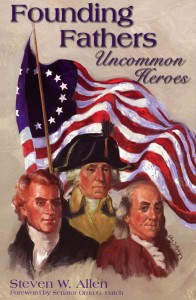 Last night my blog was all about the ages of some of the Founding Fathers. Tonight it is about You! What can you learn from their lives. Here is a poem to express that just a bit:
“You are old, Father William,” the young man cried.
“The few locks that are left you are gray.
You are hale, Father William, a hearty old man;
Now tell me the reason, I pray>”
“In the days of my youth,” Father William replied,
“I remembered that youth would fly fast;
And abused not my health and my vigor at first,
That I never might need them at last.”
The Founding Fathers were industrious and positive thinking men. They lived not only fruitful lives, but lives full of activity, wisdom, leadership, and friendship.
Benjamin Franklin, who took part in most of the life changing events of his time, lived to be 84. He died in 1790.
George Washington, the indispensible man, our nation wouldn’t exist without his accomplishments, died at the age of 67. He died in December of 1799, just before the new century was rung in.
Patrick Henry also died in 1799. He was known as America’s noble patriot and the first national hero. He was only 63 when he left his family of 17 children.
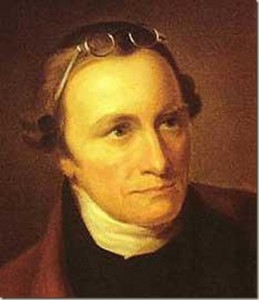 Patrick Henry warned us about losing some of our rights, even with the new Constitution. Yes, just as he warned, I was unjustly and falsely accused of conspiracy to defraud the government. To avoid a possible 37 year prison sentence, I accepted a plea offer. Later I was exonerated when the civil court decided I had done no wrong.
Read about this In my upcoming book “A Patriot Imprisoned.” Sometimes people ask me how I could have made it through confinement, imprisonment, and detention, and remain confident, optimistic, and even positive? It’s because those are my choices. That is my character.
 Benjamin Franklin’s Advice
Ben said: “If you would not be forgotten
As soon as you are dead and rotten,
Write something worth reading
Or live a life worth the writing!”
He did both!!
I had a meeting with my publisher this weekend about my upcoming book. We made some decisions. There is some basic editing and a few major changes that have to be made. The working title is “A Patriot Imprisoned”. It’s about my unjust indictment, what happened, my incarceration, and my exoneration by the civil courts (3 of them).
The book gives interesting methods I used to come to terms with and accept my ordeal, and the way my wife handled things.
My publisher has a way for you to benefit from all of the promotion & publicity of my book that will happen when my book is launched. If that is something you might want more information about at some point, please let me know! www.stevenwallenjd.@gmail.com.
 It’s absolutely a fact that the Declaration of Independence was written by Thomas Jefferson, in Philadelphia. Jefferson was a member of the committee assigned by the Continental Congress to create such a document if one should be needed. The committee was made up of Benjamin Franklin, John Adams, Thomas Jefferson, Robert Livingston, and Roger Sherman. They chose Jefferson to write the draft for their review and approval. He did. At the Graff House. The committee approved it with only minor changes.
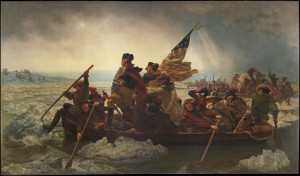 In the Revolutionary War the battles generally stopped in the winter months. That was mostly because of the cold and wet weather. George Washington didn’t consider that in his quest to cross the Delaware River and attack the British forces with the Hessian soldiers who were camped at Trenton, New Jersey. The main British army had stopped for rest, dining and dancing somewhat earlier.
You remember the victory of Trenton and Princeton. They were won when armies were usually resting and waiting for fighting weather.
Carefulness, caution, and good sense. That’s what they meant by prudence. That’s kind of like what Benjamin Franklin defined as “Moderation” in his Project for Moral Perfection. He defined moderation as “Avoid extremes; forbear resenting injuries so much as you think they deserve.” Moderation should be used in all your decisions and actions. Use reason and common sense to solve most problems.
Most of the Founding Fathers seemed to think along these same lines. Use common sense, which is not so common any longer.