I’m going to just quote this story. It is too bazaar to leave it alone and not share it with all of you.
 “Robert Todd Lincoln, Abraham Lincoln’s eldest son, is the only person to have been at the scene of three presidential assassinations. On April 14, 1865, the day his father was shot, Robert Todd rushed to Ford’s Theatre to be with his fatally injured father. In 1881, he was in the room with President James Garfield the day Garfield was assassinated. And twenty years later, he was to join President William McKinley at the Pam American Exposition, arriving shortly after McKinley was assassinated. There are many a mysterious and bizarre happenstance about Abraham Lincoln’s life and death, and so too with Robert Todd. You see, the son of the president would never have witnessed any of these assassinations had he not narrowly escaped death at a young age. While standing on a crowded platform, he stumble and nearly fell onto the tracks. He was grabbed by the back of the shirt and pulled to safety in the nick of time. The person who saved his life was Edwin Booth—the brother of John Wilkes Booth. Yeah, I got chill bumps, too!” (“Stupid History”, by Leland Gregory, 2014, page 252.) read more

 One of the character traits that Benjamin Franklin wanted to pursue to perfection as described in his “Project for Moral Perfection” was Tranquility. He defined it thus: “Be not disturbed at trifles, or at accidents common or unavoidable.”
 Here’s something I didn’t know before. In addition to being the Father of our Country, George Washington also gave America the first “Mammoth Jackass.” Yes, the large donkey. In Washington’s time the donkeys were short in height and lacked the stamina Washington needed them to have for work.
 George Washington learned how to exhibit good manners and good character, especially in public. In his youth he was taught penmanship by writing the “110 Rules of Civility and Decent Behaviour in Company and Conversation” as they were dictated by his mentor. So at an early age he was introduced into the etiquette of the times.
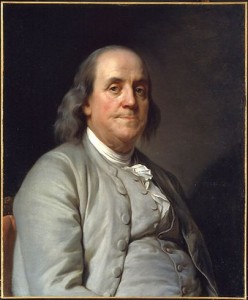 “Life with fools consists in drinking; With the wise man living’s thinking.” Benjamin Franklin.
 In the year 1634, in Boston, Massachusetts, Edward Palmer was a hard working carpenter. He was commissioned to build the first wooden stocks, by the town elders. These stocks were intended to be used for public punishment.
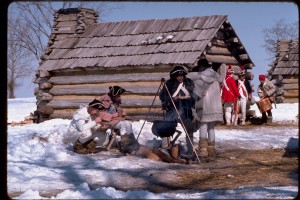 George Washington and his soldiers, such as they were, established camp at Valley Forge, Pennsylvania. It was a week prior to Christmas. They stayed there until June, 1778. During those six months as many as 2,000 men died. It was cold during the winter months, but the men didn’t die due to the weather.
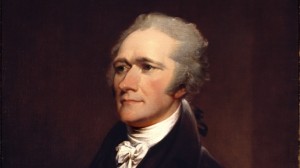 A good example is Alexander Hamilton. He was born in Nevis, the West Indies, to an unmarried mother. Somehow he found his way to America. He was introduced to George Washington who made him a part of his Revolutionary Army. He served so faithfully that Washington eventually named him to be his Secretary. He was valiant in the War and later served as George Washington’s Secretary of the Treasury.
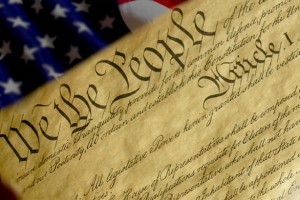 Of course Franklin knew these words were directly in the Declaration of Independence, which was upheld by the United States Constitution. He helped draft both of them. But the meaning of the direct words is vouchsafed by our Constitution.