 Thomas Jefferson was a true Christian as he said himself. He was so interested in the teachings of Christ that he used his language skills to cut out and place the 4 books of the New Testament Gospels (Matthew, Mark, Luke, and John) side by side in 4 different languages (in which Tom himself was proficient, of course) so that he could see for himself the minute differences rendered in each language.
Incidentally that is why some history writers deemed Tom to be an anti-Christian, because some copies of the Bible in different languages was found upon Jefferson’s death. These Bibles were, of course mutilated and destroyed by cutting words out of pages—lots of them! Thomas was thorough in his studies, and serious in his findings.
 t’s hard for me to write anything negative about Thomas Jefferson, I love him so much and admire him for what he has given us. Jefferson taught others not to spend your money before you have it, to save and be frugal. Yet he didn’t seem to listen to his own advice in that regard.
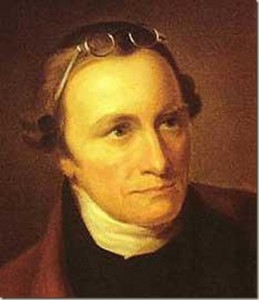 Patrick Henry summed it up well in his last will and testament. “This is all the inheritance I can give to my dear family. The religion of Christ can give them one which will make them rich indeed.
 “Each of us was given a portion of God’s light, called ‘the Light of Christ,’ to help us distinguish between good and evil, right and wrong. This is why even those who live with little or no knowledge of the Father’s plan can still sense, in their hearts, that certain actions are just and moral while others are not.
 John Adams was creative and artistic in his use of words. He once explained to Abigail that he wanted to write a book to express his feelings and knowledge about the new Constitution which was being written while he was a diplomat to Great Britain.
 Thomas Paine had a great influence in the hearts of early Americans, especially the soldiers serving under General George Washington. George expected obedience and loyalty from his troops. He wanted them to quit the use of foul language, to show respect to others, and to do their duty. The soldiers grew to love their leader.
 In his elder years John Adams and Thomas Jefferson rekindled their friendship. They carried on a correspondence that covered every known topic. They were both very learned gentlemen and together they had accomplished more than anyone could have expected. Thomas Jefferson wrote the Declaration of Independence without books or reference materials. John Adams carried the day at the convention by his forceful power of speaking.
 Dolley Madison, who was married to James Madison, was raised a Quaker. She gave up her religion when her father was banished from the Quaker religion when he filed for bankruptcy as his starch making business failed. Dolley couldn’t get over that.
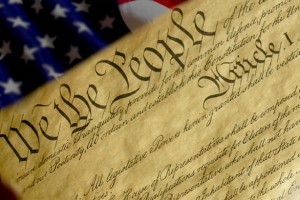 We learned in our Contracts class, that to understand a contract you had to look into the “four corners” of the document to understand the basic premise. That apparently isn’t the case with the most important document in the establishment of the nation, the Constitution.