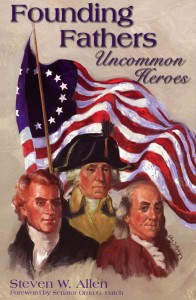
 The Founding Fathers of our nation established a republic, a democracy that turned the power to the people. It was a new nation that said that the citizens, the people, would come first and would therefore choose their own leaders for the new nation.
In and around this rich new culture, there was faith and morality. The Founders hoped that culture would continue to allow America to become a light on the hill for the whole world.
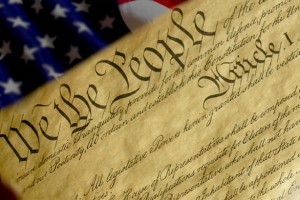
The combination of the Spirit of the Revolution, Declaration of Independence, the new U.S. Constitution, The Bill of Rights, and the foundation in law was new in the world. As Benjamin Franklin said: “It’s a Republic—if you can keep it. The most fervent desire of the Founding Fathers was that we, as a people, would watch over this nation, with these founding documents, culture, and faith, and keep it strong forever.
 George Washington became known as “The Father of Our Country”. Such a fine title for someone who had no children of his own. The country was his child. He was the Indispensible Man.
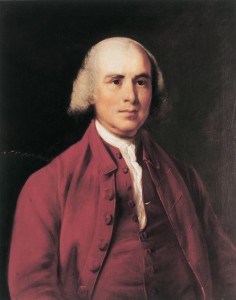 Fathers Day having just passed, I have been thinking a little bit about the man we call “The Father of the Constitution”. The anniversary of his death is coming soon. He died on June 28, 1836, at the age of 85. He lived the last several years at his home, Montpelier, Virginia. His home wasn’t too far from Monticello, the home of his beloved friend, Thomas Jefferson.
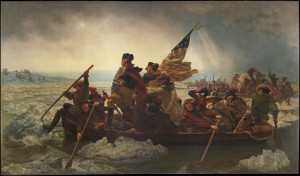 In his youth, George Washington developed faith. He was very private about his faith. During the Revolutionary War his soldiers Knew he often went into the trees to be alone in prayer, or sometimes he knelt in his officers quarters. But George was private about his beliefs, usually referring to “the hand of Providence” when he knew he had been protected by God.
 Benjamin Franklin was a religious man, but he didn’t much care for organized religion. At least not as it was presented to him. But he did believe in God. And he had some things to say about our Constitution.
 On top of that I received some treasured gifts from my wife and from my daughters. I won’t tell you which are from which one lest the others feel slighted. But I got a See’s candy gift card, and four different good books. “First Freedom, a Fight for Religious Liberty” by Randall Balmer, Lee Groberg, and Mark Mabry (full of beautiful pictures in addition to the words). “America in the Last Days, The Constitution and the Signs of the Times” by Morris Harmor. “John Quincy Adams” by Harlow Giles Unger. And “Dreamers and Deceivers, True Stories of the Heroes and Villains Who Mad America”, by Best Selling Author, Glenn Beck.
 Happy Fathers Day to all of you Founding Fathers fans. You know that two of our most famous Founding Fathers had no children of their own. What? They weren’t really Fathers. Well, no, not in that sense. But they were Founding Fathers, and are esteemed as such.
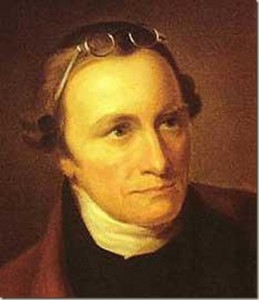 Patrick Henry didn’t like the U.S. Constitution. He spoke out forcefully against its adoption in the Virginia Constitutional Convention. He spoke nearly every day –18 of the 23 days of the Convention, arguing against its adoption. Why didn’t he like it, you ask? It wasn’t because he was not a true patriot. He was known as America’s first patriot.