 Some people just still don’t get it and don’t really want to. Live your life and let everyone else live theirs.
That reminds me. What’s the difference between ignorance and apathy?
I don’t know,
And I don’t care!
Some people just still don’t get it and don’t really want to. Live your life and let everyone else live theirs.
That reminds me. What’s the difference between ignorance and apathy?
I don’t know,
And I don’t care!
 I haven’t checked this out myself yet, but I’ve been told that the word Independence, although it’s in the title, is not in the body of the document. How can that be? Time to read it again.
It should be noticed that of the 56 signers of the Declaration of Independence, only two went on the become Presidents of the United States of America. And they were the two who had the most to do with the writing and adoption of that historic document. Those two were Thomas Jefferson (3rd President) and John Adams (1st Vice President and 2nd President, to serve only 1 term).
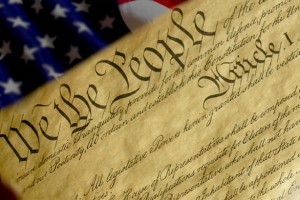
“We hold these truths to be self-evident, that all Men are created equal, that they are endowed by their Creator with certain unalienable Rights, that among these are Life, Liberty, and the Pursuit of Happiness—That to secure these Rights, Governments are instituted among Men, deriving their just Powers from the Consent of the Governed, that whenever any Form of Government becomes destructive of these Ends, it is the Right of the People to alter or abolish it, and to institute new Government, laying its Foundation on such Principles, and organizing its Powers in such Form, as to them shall seem most likely to effect their Safety and Happiness.”
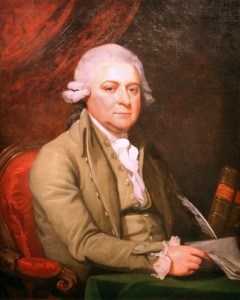 It’s coming up. Look for it in your neighborhood. John Adams gave us some advance warning of what he thought would and should transpire on July 4th each year (only he thought it would surely be July 2nd—the day the proposal to break with Great Britain was agreed upon). The Declaration itself would be approved and ratified on July 4.
John Adams wrote to Abigail: “Yesterday the greatest Question was decided, which ever was debated in America, and a greater, perhaps, never was nor will be decided among Men . . . The 2nd day of July, 1776, will be the most memorable Epocha [sic], in the History of America – I am apt to believe that it will be celebrated, by succeeding Generations, as the great anniversary Festival. It ought to be commemorated as the Day of Deliverance by solemn Acts of Devotion to God Almighty. It ought to be solemnized with Pomp and Parade, with Shews [sic], Games, Sports, Guns, Bells, Bonfires, and Illuminations from one End of this Continent to the other from this Time forward forever more.” (“Abigail Adams, a Biography”, 1987, by Phyllis Lee Levin, pages 90-91. Capitals as in the original.)
 Yes, within a week we will celebrate the Fourth of July, or Independence Day. It was a dramatic change in the way individuals looked at being the subjects to a higher power, namely a King.
The colonies were separated from Great Britain by a wide ocean. They had become used to deciding what should be done in their own country. In many senses they had already been governing themselves, and they liked it that way. So when England decided the colonies needed to pay more in the way of taxes to support their King, they rebelled.
 The Founding Fathers were men of wonderful and noble faith. You only have to read a selection of some of their writings to get a glimpse into this. John Adams was one who believed that the new nation should be an example of piety and righteousness to the world. He relied on Providence for help in his career. Providence was a popular appellation for the Heavenly Father out of respect for his name.
John Adams wrote in a letter to Abigail: “But I must submit all my Hopes and Fears, to an overruling Providence, in which, unfashionable as faith may be, I firmly believe.”
 In light of the debate that continues about the status of health care in the United States, I’ve been considering some of the thoughts of our Founding Fathers. They founded this nation on freedom, self-reliance, and accountability. Those are character traits that were important to them. Now we are considering how everyone can have adequate health care at the cost of the whole citizenry.
In my reading this week I came across an article that was printed around 1950. I found it astonishing in light of our current debates. I thought you might enjoy the feelings of our patriots in the 1950’s.
 Lincoln was an avid reader. He always kept a book nearby. He read the newspapers voraciously. He loved books. His favorite books included the Bible and books about his beloved George Washington, especially the biography by Reverend Mason Locke “Parson” Weems.
It was through reading books that Lincoln learned how to speak, but he understood that speaking was useless unless people would actually listen to you. That’s why most of his speeches were filled with anecdotes and stories.
Have you ever considered that Abraham Lincoln became President of the United States because of his ability to find the truth by public discussion. Abe Lincoln was not a governor of any state as were Wilson and Roosevelt. He had only served one uneventful term in Congress. But he achieved his prominence through his debates with Stephen A. Douglas.
There’s been a overwhelming amount of vitriol in the voice of the people and the media these days. Who would have thought it could ever be this bad about a man who just wants to make America great. Even if Donald Trump just makes it better, wouldn’t that be great?
Abraham Lincoln had a similar problem in his presidency. The Civil War was fought on the battlefields and in the press. At that time the newspapers were also full of descriptions of the feats of a well-known tight rope walker named Blondin.
 Why did the Colonists win the Revolutionary War? America was not at the center of the world at the time. England was. Great Britain was slow to understand the nature of the threat of war with America and its colonies.
Americans were a bunch of rag-tag but hearty fighters dedicated to an idea. The idea was quite real. It was an idea of personal liberty, freedom and self-government.
The soldiers fighting for England were fighting for their empire or they were being paid to fight for it. When you are fighting for something more personal you are more devoted to the purpose of the fight. It is more personal. It means more to the fighters.