 The football game between Southern Methodist University and Notre Dame had just begun when the Fighting Irish scored a touchdown. A spectator immediately jumped to his feet, yelled in an unabashed tone and patted his neighbor on the back.
When just a few moments later, Southern Methodist scored a touchdown. That same spectator sprang to his feet again, and yelled with delight at the outcome.
Well, that aroused the person’s curiosity who was sitting next to this man. He asked: “Which team are you rooting for, friend?”
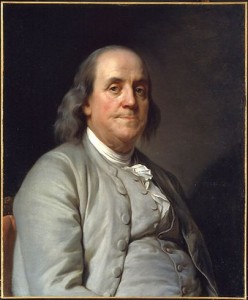 We know that Benjamin Franklin was a great scientist, inventor, printer, businessman, diplomat, horseman, ambassador, mentor, public servant, and Founding Father. But we don’t often think of him as an author. But we should.
 When John Adams was still a young attorney, the Boston Massacre took place. No lawyer wanted to defend the British soldiers that were accused of murder in the case. John Adams eventually learned that the whole matter would probably end with the British being found guilty. Because his cousin Sam Adams was there, John knew some of the facts. He also knew that no one would defend the soldiers.
 The past few days so many editorialists and commentators have touted that we have a great democracy. I must remind you once again, we, in America, do NOT have a democracy. Remember how after the Constitution was finally approved by the Constitutional Convention in 1787, Benjamin Franklin was asked “what was the result of the deliberations. What kind of government do we have?”
 Benjamin Franklin did not, no he didn’t, write the first American novel. However, as a printer, he did publish the first novel in America. The first novel written in plain English was “Pamela” by Samuel Richardson. That was published in London in 1742. Benjamin Franklin brought it to America and published it himself in his printing shop in 1744.
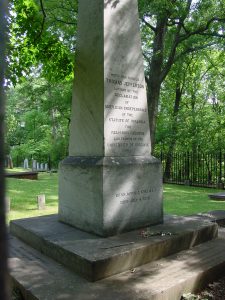 Some say that whatever a man has decided to have placed on his tombstone says a lot about what that man considered to be of greatest importance in his life. Knowing that you would think that a man who accomplished as much in his life as did Thomas Jefferson would need a large grave marker. Or perhaps he’d need several tombstones to give the full story.
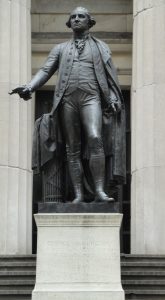 It may be “much ado about nothing”. I still believe that small details are and must be important. It may just be a small peccadillo. But for some reason it seems to be important to me. It may not be something to quibble about, but perception is everything. And it’s how I look at things, especially today—small things are important.
 The story is often told about how President Abraham Lincoln felt about some of his Generals during the Civil War. Apparently someone complained to Lincoln about the drinking habits of General Ulysses S. Grant.
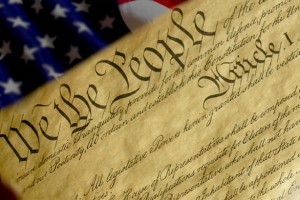 The U.S. Constitution is an amazing document. It is an agreement between the States, yes, the States. Not the individuals. The Founding Fathers came up with a wise method for such transitions of power. They had to please the large States as well as the small States in their method. That’s one reason we are not a true democracy. We are a Republic—if you can keep it, as Benjamin Franklin declared.
 Poor Richard’s Almanac was written and printed by Benjamin Franklin, Printer, and it was very popular. We still use some of his hokey sayings today. For example: “Three may keep a secret if two of them are dead>”