
 Dolley Madison, who was married to James Madison, was raised a Quaker. She gave up her religion when her father was banished from the Quaker religion when he filed for bankruptcy as his starch making business failed. Dolley couldn’t get over that.
She was vivacious and outgoing and made a difference, a huge difference in the life of James Madison. The problem was that she usually said anything that popped into her head. Sometimes that wasn’t ‘politically correct’, even then.
Dolley called her husband ‘Jemmy’, as a term of endearment. Jemmy, a usually serious man, used to laugh at Dolley when she would just blurt something out. James kept much to himself, and he warned Dolley “In politics, think before you speak, and if you intend to say what you really mean, then think twice!”
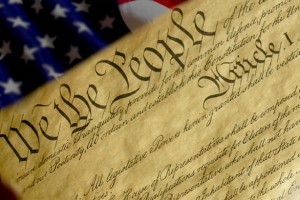 We learned in our Contracts class, that to understand a contract you had to look into the “four corners” of the document to understand the basic premise. That apparently isn’t the case with the most important document in the establishment of the nation, the Constitution.
 Persuading others to your point of view requires patience and endurance. Franklin assumed that people change their minds only slowly and indirectly. Ben would say: “If you don’t win the bargain today, go after it again tomorrow.” Here are some of the tips Franklin recommends for initiating persuasion:
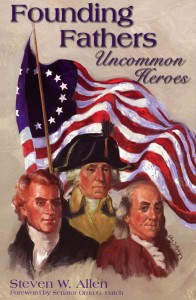 I flipped through some notes and here’s what I found:
 One of the character traits that Benjamin Franklin wanted to pursue to perfection as described in his “Project for Moral Perfection” was Tranquility. He defined it thus: “Be not disturbed at trifles, or at accidents common or unavoidable.”
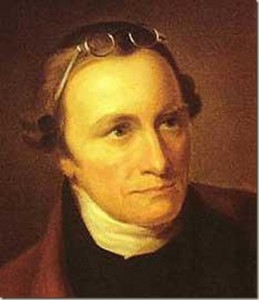 Patrick Henry warned us about losing some of our rights, even with the new Constitution. Yes, just as he warned, I was unjustly and falsely accused of conspiracy to defraud the government. To avoid a possible 37 year prison sentence, I accepted a plea offer. Later I was exonerated when the civil court decided I had done no wrong.
 It’s absolutely a fact that the Declaration of Independence was written by Thomas Jefferson, in Philadelphia. Jefferson was a member of the committee assigned by the Continental Congress to create such a document if one should be needed. The committee was made up of Benjamin Franklin, John Adams, Thomas Jefferson, Robert Livingston, and Roger Sherman. They chose Jefferson to write the draft for their review and approval. He did. At the Graff House. The committee approved it with only minor changes.