
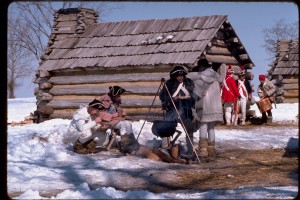
 George Washington and his soldiers, such as they were, established camp at Valley Forge, Pennsylvania. It was a week prior to Christmas. They stayed there until June, 1778. During those six months as many as 2,000 men died. It was cold during the winter months, but the men didn’t die due to the weather.
The close and unsanitary conditions at the camp became a breeding ground for dysentery, typhus pneumonia, and typhoid. But the main killer was not the disease either. The main problem was the surrounding farmers. Many of them chose to sell their produce to the British instead of the Army for the new United States. It seems they trusted the English sterling more than any recently minted American money.
 If you would like to know
 Numerous strange stories come out of the Revolutionary War. For one thing, the practice of hanging criminals and spies was often the case in that war. We know about Nathan Hale, who regretted that he had only one life to give for his country. Hanging was popularized in the Old West.
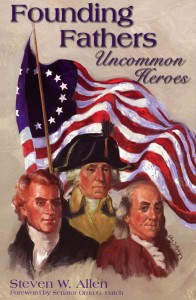 Benjamin Franklin, who took part in most of the life changing events of his time, lived to be 84. He died in 1790.
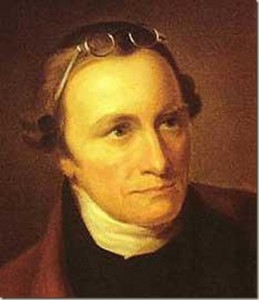 Patrick Henry warned us about losing some of our rights, even with the new Constitution. Yes, just as he warned, I was unjustly and falsely accused of conspiracy to defraud the government. To avoid a possible 37 year prison sentence, I accepted a plea offer. Later I was exonerated when the civil court decided I had done no wrong.
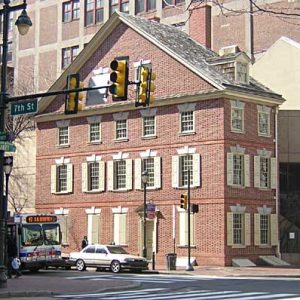 It’s absolutely a fact that the Declaration of Independence was written by Thomas Jefferson, in Philadelphia. Jefferson was a member of the committee assigned by the Continental Congress to create such a document if one should be needed. The committee was made up of Benjamin Franklin, John Adams, Thomas Jefferson, Robert Livingston, and Roger Sherman. They chose Jefferson to write the draft for their review and approval. He did. At the Graff House. The committee approved it with only minor changes.
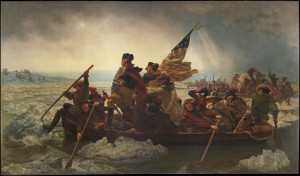 In the Revolutionary War the battles generally stopped in the winter months. That was mostly because of the cold and wet weather. George Washington didn’t consider that in his quest to cross the Delaware River and attack the British forces with the Hessian soldiers who were camped at Trenton, New Jersey. The main British army had stopped for rest, dining and dancing somewhat earlier.
 Christ the Lord is risen today,