
 In his autobiography Benjamin Franklin discusses his own “Project for Moral Perfection.” He decided he wanted to be as close to perfect as he could become in his life. He organized his project and listed 13 character traits he wanted to improve in relation to. These are all described in his book, as well as his definition of each and his chart that he worked on all his life.
I’ll just list these characteristics here:
1. Temperance—eat not to dullness. Drink not to elevation.
2. Silence—speak not but what may benefit others or yourself; avoid trifling conversation. Seek not to dispute or contend.
3. Order—Let all your things have their places; let each part of your business have its time.
4. Resolution—Resolve to perform what you ought; perform without fail what you resolve.
5. Frugality—Make no expense but to do good to others or yourself; that is waste nothing.
6. Industry—Lose not time; be always employed in something useful; cut off all unnecessary actions.
7. Sincerity—Use no hurtful deceit; think innocently and justly; and if you speak, speak accordingly.
8. Justice—Wong none by doing injuries, or omitting the benefits that are your duty.
9. Moderation—Avoid extremes; forbear resenting injuries so much as you think they deserve.
10. Cleanliness—Tolerate no uncleanliness in body, clothes, or habitation.
11. Tranquility—Be not disturbed at trifles, or at accidents common or unavoidable.
12. Chastity—Rarely use venery but for health or offspring, never to dullness, weakness or the injury of your own or another’s peace or reputation.
13. Humility—Imitate Jesus and Socrates.
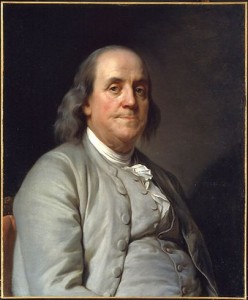 The story is told about a gathering of foreign ministers together for business and dinner a few years after the Revolutionary War. The British Ambassador presented his toast: “England—the sun, whose bright beams enlighten and fructify the remotest corners of the earth.”
 “Oh, he’s a politician, you can’t believe anything he says!”
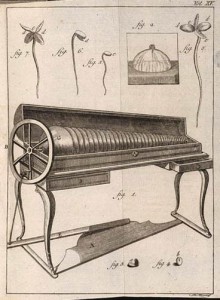 He proved that lightning was made up of electricity. He designed the medical device called a urinary catheter, to save his brother. He invented the Franklin Stove and the lightning rod. He got tired of changing his glasses, so he invented the first bifocal lenses. He designed the odometer to figure out how far his carriage had traveled. He loved music and invented the Armonica. And on and on. He was the first great American scientist and inventor. (And you can add to that diplomat, statesman, and Founding Father.)
 I’ve got to get some new quote books! I looked in six of my favorite quote books to find something said about “Good Friday.” There was nothing in any of them. How does that happen? Well, I guess they’re not really religious quote books, but still . . .
 I can remember in detail a story which was told to me several years ago. A good friend had a son, Ken, who was working for a large grocery store in his area. He was a good high school student as well as worker. One evening my friend was waiting in his car to give his son a ride home after work. The store manager appeared at his car window. He rolled it down. The manager introduced himself and asked if her were Ken’s dad.
 Many years ago our former President, Calvin Coolidge, said this: “Nothing in the world can take the place of persistence. Talent will not; nothing is more common that unsuccessful men with talent. Genius will not; unrewarded genius is almost a proverb. Education will not; the world is full of educated derelicts. Persistence and dedication alone are all powerful.”
 There was a naturalist named William Beebe and he was a friend of President Theodore Roosevelt. Roosevelt, of course, was a great friend of nature, as we know. He began the now very extensive National Park system.