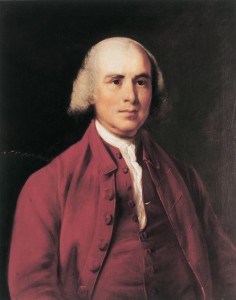
 James Madison had prepared himself to be a builder of nations. He wanted to go to The College of William and Mary, like his close friend and mentor. However he found that the weather and temperatures there were not favorable to his health and stamina. So he looked northward and enrolled at The College of New Jersey, later known as Princeton College, which had a good reputation. Princeton had been founded originally to train Presbyterian Ministers.
James graduated after receiving a solid education in only 2 ½ years. He went on to study law, but never practiced that profession. After the Revolutionary War he was extremely concerned that the Articles of Confederation just weren’t working. They needed to be amended.
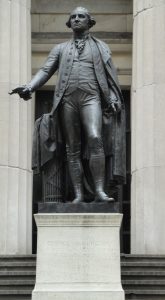 By now you know I enjoyed reading Timothy Ballard’s “The Washington Hypothesis.” It gave me some new insights. One particular part of the hypothesis is the reference to the Bible. When George Washington was given the Oath of Office as the new First President of the United States of America, he asked that a Bible be produced so that he could receive the Oath as a Covenant.
 An hypothesis is, of course, also defined as a theory, a conjecture, a postulation, or a premise. In other words, it’s not for sure. But it makes for good reading!
 Most of us remember a little bit about the Revolutionary War as we learned it in our youth. We can recall the heroic efforts of Colonel Knox at Boston as he was requested to recover lost cannon and other materiel lost at Fort Ticonderoga. We remember the victory at Dorchester. Then the move to New York, where George and his valiant soldiers were chased from Long Island, lost at several posts along the retreat, and moved to New Jersey.
 After Thomas Jefferson completed his draft of the Declaration of Independence, he submitted it to the committee ordained for that purpose. They made only a few changes or suggestions. Then it was placed before the whole Congress for its adoption.
 John Adams who had spoken fervently in Congress that such a proposition should definitely be approved, was excited. He was so proud of this accomplishment that on July 3, he wrote home to Abigail:
 Albert Einstien was once an avowed atheist. After study and consideration, he seemed to change his tune. Here’s what he said: