James and Dolley Madison

Dolley MadisonDid you know that Dolley Madison was a widow with two children before she married James Madison? That’s right, Dolley had met and married John Todd, a lawyer, who was like Dolley, also a Quaker. After their marriage they had two children together.

Then there was the year of the yellow fever epidemic which nearly drove the government out of Philadelphia. Dolley and her two kids left John in Philly while they went out to “the country” to be safe from the disease. John, a lawyer, stayed behind to help his parents, and the residents of the city with their well-being. He wrote many wills. read more
Old Constitution or New Constitution

constitutionMany new students of our form of government seem to think they have a better idea. We should try more direct democracy, or perhaps a modern socialism, or even communism would work better.
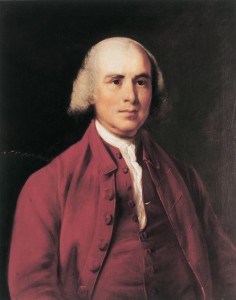
I’ve got a consideration for everyone who wonders about this. Our Founding Fathers were so concerned about their new government they made world governments a serious study. They studied Greece, Rome, and even Israel. They knew about Monarchies and dictatorships. James Madison in particular made it a serious study. How do governments operate and how do they eventually work. read more

James Madison, The Littlest Big Man of the Constitution

JamesMadisonThe man known as “The Father of the Constitution”, James Madison, was huge in history, but he was small on the scene. His friends said he “was not much bigger than a half a bar of soap!” He said he was “about 5’6” while others have described him as 5’2” or thereabouts.
But all admit he was a scholar. Madison has been hailed as the prime creator of the U.S. Constitution, but he rejected such praise, saying: “You give me credit to which I have no claim, calling me THE writer of the Constitution of the U. S. This was not like the fabled Goddess of Wisdom, the offspring of a single brain. It ought to be regarded as the work of many heads and hands.” read more

Patrick Henry and the Virginia Constitutional Convention

PatrickHenryAfter the Constitution was ratified by the U. S. Constitutional Convention, it went to the States for their own State Conventions. Would the States accept it and approve of it? No one knew for sure.

Alexander Hamilton, John Jay and James Madison (the Father of the Constitution) wrote a manual to explain the arguments for and against this document. They wrote it to allay some of the State’s fears. That later became the book “The Federalist Papers”. You’ve read it, of course.

In Virginia Patrick Henry, the most influential patriot, opposed the Constitution, and said so in the convention. The Virginia Convention lasted 23 days. Patrick Henry spoke on 18 of those days, explaining his reasons for objecting to approval. One of those speeches lasted 7 hours! read more

James Madison and The Constitutional Convention

constitutionNot only did James Madison convince George Washington to attend the Constitutional Convention in Philadelphia, he promoted other members and their ideas along the way.

James convinced Governor Edmund Randolph to introduce his “Virginia Plan” in such a way that would comply with the purpose for which the Convention had been called. Its original purpose was to amend the unworkable Articles of Confederation. Yes, amend them out of existence.

Edmund Randolph had been an “Aide de Camp” to General George Washington during the Revolutionary War. Randolph was the currently acting Governor of Virginia. So he was a man of learning and prestige who would be listened to at this Convention. Randolph made an extraordinary introduction to Madison’s plan. read more

George Washington and the News

Scene_at_the_Signing_of_the_Constitution_of_the_United_StatesThe President of the Constitutional Convention, George Washington, was determined to prevent leaks from the meetings in Philadelphia. One day one of the delegates absent-mindedly left his notes behind on a table in the meeting room.

The next day President Washington held up the page of notes before the group, saying: “I must entreat the gentleman to be more careful lest our transactions get into the newspapers and disturb the public response by premature speculations. I know not whose paper it is, but there it is; let him who owns it, take it.” read more

Founding Fathers and Words

ThomasJeffersonThomas Jefferson, George Washington and Benjamin Franklin had several things in common. Not the least of which was how they faced an argument or a political debate.

Thomas Jefferson explained how he thought about his friends and fellow Founding Fathers this way: “I never heard either of them (George Washington and Benjamin Franklin) speak ten minutes at a time, nor to any but the main point . . .They laid their shoulders to the great points, knowing that the little ones would follow of themselves.” read more

Jefferson and Words

ThomasJeffersonOur American language has some strange words, or words with different meanings than you would expect. Jefferson was, of course, great with words. George Washington was trained in his youth to write well and use correct words. John Adams did so well with words that he told Abigail that he only accomplished good things with his exemplary use of language—words.

Just for the record, some words don’t seem to make sense any more because their original meaning has been lost. Album is a word that comes to mind. It was used to mean a vinyl record when record players were the vogue. Originally records which spun around the records player at 78 revolutions per minute (RPM), could only contain 4-5 minutes of recorded music. read more

John Adams and Complaining

Sometimes I feel a little bit like Lucy in the popular Peanuts cartoon. In this comic strip Lucy is looking out the window of her home and watches it rain. She yells: “STUPID WEATHER!”

As she turns back in to the house, Linus asks her: “Are you complaining again? Do you realize that you spend all your time complaining?”

Next panel Lucy responds to Linus: “Why shouldn’t I complain?”

Then adds: “It’s the only thing I’m good at!”

JohnAdamsSome of us feel that way from time to time. All we do is complain. But some of us have learned that complaining doesn’t do any good. You actually have to do something about it. read more

The American Way

ThomasJeffersonGeorge Washington, our first President, said this: “Government is not reason, it is not eloquence, it is force; like fire, a troublesome servant and a fearful master. Never for a moment should it be left to irresponsible action.”

Thomas Jefferson wrote: “We hold these truths to be self-evident, that all men are created equal, that they are endowed by their Creator with certain unalienable rights, that among these are life, liberty and the pursuit of happiness.”

That’s where we get out freedoms from. Not from the government, but from God. But it’s a troublesome servant and a fearful master. We have to stay in charge, not give it away. read more