 When John Adams was still a young attorney, the Boston Massacre took place. No lawyer wanted to defend the British soldiers that were accused of murder in the case. John Adams eventually learned that the whole matter would probably end with the British being found guilty. Because his cousin Sam Adams was there, John knew some of the facts. He also knew that no one would defend the soldiers.
John Adams then determined that he would take the case to insure that no injustice would be done. His friends all told him that would be the end of his career as a lawyer. He took it. He won. It wasn’t the end of his career. He gained the admiration of the city folk as a lawyer who was honest and fair.
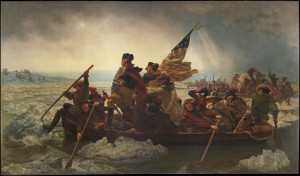
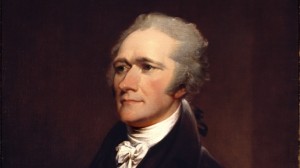 Alexander Hamilton was a favorite of General George Washington. Few remember that Hamilton was with Washington as he crossed the Delaware and captured the Hessian fighting force at Trenton in December, 1776. Hamilton actually lit the touchholes with the flames that fired the canon at the Hessian barracks that night. James Monroe, the future President, was in charge of the charge. You remember, they won that battle and much later went on the win the Revolutionary war.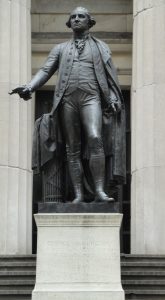
 Benjamin Franklin did not, no he didn’t, write the first American novel. However, as a printer, he did publish the first novel in America. The first novel written in plain English was “Pamela” by Samuel Richardson. That was published in London in 1742. Benjamin Franklin brought it to America and published it himself in his printing shop in 1744.
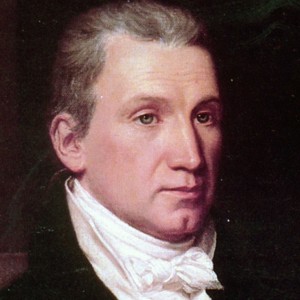 James Monroe, while not considered one of the Founding Fathers directly, did serve with and was influenced by them. Monroe was in the camp with George Washington in December, 1776. You recall that was the month that Washington directed the assault across the Delaware River in a snowstorm to attack the British and their hired warriors, the Hessians. The Hessian were considered the most mighty and brutal of all the fighting armies at the time.
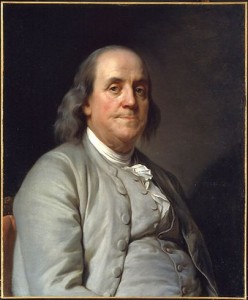 “I must soon quit this scene. But you may live to se our country flourish, as it will amazingly and rapidly after the war is over; like a field of young Indian corn, which long fair weather had enfeebled and discolored, and which in that weak state, by a thunder gust of violent wind, hail and rain, seemed to be threatened with absolute destruction; yet the storm being past, it recovers fresh verdure, shoots up with double vigor, and delights the eye, not of its owner only, but of every observing traveler.”
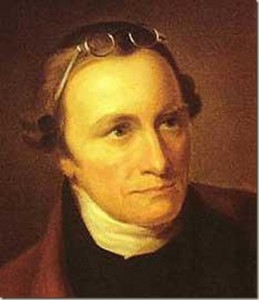 As I was editing some material this week, I was once again enchanted by my description of a recent trip my wife and I took to Virginia. One of the most memorable placed we stopped was Red Hill. This was Patrick Henry’s retirement home, and where his grave is located.
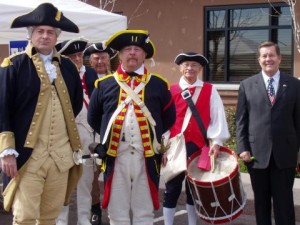 In the Revolutionary War George Washington was skillful in using unsuspected citizens or soldiers as spies on the British. He developed many methods with gave him success. But he didn’t always get away with it!
 One of the interesting stories in history is that about the Nobel Peace Prize. I know our politicians are envious and some are determined to win this prize. It has been awarded to our current President. But few know the background about Alfred Nobel who started the process. Mr. Nobel was a Swedish chemist and the inventor of dynamite. As such he made a fortune in mining, construction and warfare. I wonder how this invention could have changed the Revolutionary War if it had been discovered sooner!
 It was so interesting to read a report in the newspaper today about Philadelphia and the Mormons. You may know that the true name of the Mormon Church is “The Church of Jesus Christ of Latter-day Saints”. They are referred to as the Mormons because they believe in a New Testament of Jesus Christ which is titled The Book of Mormon.